


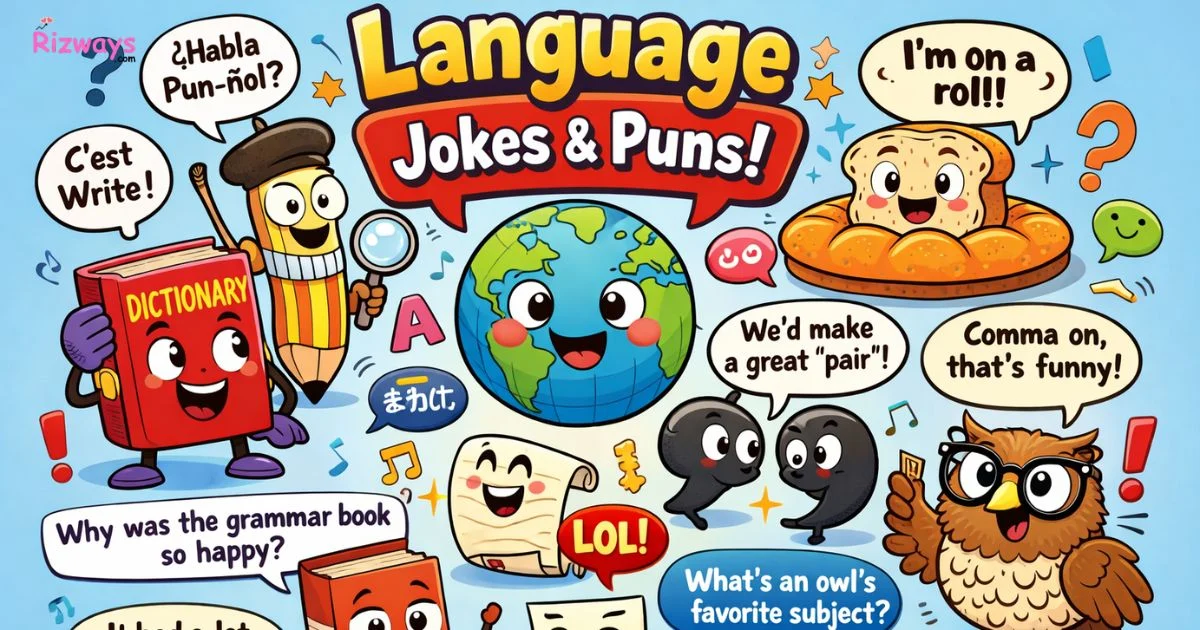
The magic of language jokes, tiny sparks of humor that flip grammar, accents, and everyday phrases into punchlines. Whether it’s puns that twist meanings, witty wordplay, or clever linguistic quirks, language jokes turn ordinary conversations into moments of surprise and laughter. They aren’t just fun, they help us see the quirks in communication, play with idioms, and connect over shared “oops” moments we all know too well.
From clever one-liners to amusing misunderstandings, these jokes make learning words feel like a comedy show and brighten even the dullest conversations. Teachers, students, and word nerds all enjoy these laughs, because even simple phrases can have double meanings that crack us up.
Ready to explore the funniest flips, twists, and misheard marvels that language can deliver? Let’s dive into a world where words aren’t just spoken, they’re laughed at.
If you want to read more funny puns post about language puns and jokes you can see out Colombian Joke.
Funny And Best Language Jokes
- I tried to make a pun about syntax but it left everyone hanging.
- Grammar jokes never get old they just age like fine punctuation.
- My dictionary is a great listener it always gives me word advice.
- I once told a pun about linguistics but it went over everyone’s head.
- Phonetics humor always sounds funny even when no one gets it.
- I asked the verb to play cards but it refused it didn’t like conjugation games.
- I told a joke in Old English and nobody could pronounce the punchline.
- Punctuation jokes always have a period they know where to stop.
- I started a conversation with a semicolon and it paused awkwardly classic punctuation humor.
- My thesaurus and I argued it’s a classic wordplay conflict.
- Writing palindromes as jokes is tough they read the same backward and forward.
- Idioms are tricky I spilled beans literally while telling one.
- The linguist got lost in translation an example of cross-language comedy.
- I wanted to impress with phonology jokes but my friends couldn’t hear the difference.
- My sentence wanted a vacation it needed a little verb tense relaxation.
- I tried making a pun about synonyms but it repeated itself.
- Metaphor jokes often go deep but surface-level laughs are guaranteed.
- The semicolon threw a party it was all about sentence structure fun.
- I told a joke in multiple languages and created an accidental linguistic mashup.
- Wordplay enthusiasts always find humor where others just see letters.
Cute Language Jokes
- My alphabet pillow always gives me letter hugs at bedtime.
- I told a pun about vowels and it made everyone smile.
- The comma waved and said hello classic punctuation friendliness.
- I whispered a secret to the semicolon and it winked back playful grammar fun.
- Syllable jokes always bounce around with energy.
- My dictionary blushes whenever I write sweet wordplay.
- The apostrophe hugged the word it belonged to cute pun punctuation.
- I caught a lowercase letter trying to sneak out tiny alphabet humor.
- Homophone jokes are like cuddly twins they sound the same but look different.
- I told a kitten about linguistics and it purred with understanding.
- The exclamation mark jumped in excitement over punny words.
- My thesaurus gave me a hug it’s full of synonym love.
- I found a love letter in a dictionary classic romantic wordplay.
- Consonant jokes stick together like best friends.
- I made a pun for my language teacher it got a cute giggle response.
- Letters held hands and formed words classic alphabet affection.
- I asked a verb on a date it conjugated properly cute grammar romance.
- The pun about onomatopoeia went meow and made everyone laugh.
- My sentence wore a smiley face punctuation made it extra adorable.
- Language learning humor makes even textbooks feel warm.
Related Post: 740+ Fresh and Funny: Mint Puns That Pack a Punch (2026)
Short Language Jokes
- Why did the verb break up with the noun funny grammar breakup.
- Punctuation walks into a bar classic pun night.
- I asked a semicolon for directions witty pun guidance.
- The dictionary sighed after a long day funny word exhaustion.
- Why was the pronoun shy grammar personality joke.
- I told a pun in Morse code it beeped back laughter.
- Letters gossip in the margins classic typography humor.
- Why did the apostrophe sit alone pun punctuation.
- The noun tripped over the adjective playful word stumble.
- I found a secret message in my thesaurus witty synonym surprise.
- Homonym jokes always sound like fun even when repeated.
- Why did the semicolon smile grammar humor.
- I tried punning with syllables they bounced back.
- Letters play hide-and-seek in texts classic typography fun.
- The exclamation mark yelled for attention pun emphasis.
- Why did the letter go to therapy funny alphabet humor.
- I made a pun about paragraphs it had a nice flow.
- Puns about clauses always connect words cleverly.
- Why was the punctuation mark tired funny grammar exhaustion.
- I told a joke to the dictionary it looked up the humor.
Read More: Rizz Jokes That Instantly Boost Your Charm
Foreign Language Jokes
- I tried French puns they baguette a laugh.
- Spanish wordplay always makes linguistics enthusiasts smile.
- Italian idioms are pasta-tively funny.
- German compound words make hilarious language mashups.
- Japanese kanji jokes draw lots of smiles.
- Mandarin tones make phonetic humor challenging.
- Russian wordplay leaves everyone feeling lost in translation.
- Portuguese puns travel smoothly like a river joke.
- Arabic script jokes always curve into humor.
- Hindi wordplay leaves a sweet pun taste.
- Korean hangul jokes stick together like syllables.
- Swedish wordplay gives IKEA-level structure humor.
- Greek alphabet jokes go alpha to omega.
- Turkish language jokes roll off the tongue smoothly.
- Hebrew wordplay builds strong semantic bridges.
- Vietnamese tonal jokes keep everyone alert.
- Finnish compound jokes feel endlessly long but funny.
- Polish language puns twist like consonant clusters.
- Multilingual jokes unite language learners worldwide.
Language Jokes One Liners
- I told a pun and the dictionary blushed.
- Grammar teachers live for syntax humor.
- Words walk into bars and make pun-filled sentences.
- The semicolon waved it was happy punctuation humor.
- Puns about verbs always conjugate laughter.
- Nouns are like friends they hold the story together.
- Adjectives dress up the nouns in style.
- I whispered a pun to a verb and it ran away.
- Letters play hide-and-seek in your sentences.
- Homonym jokes always confuse then amuse.
- I told a pun about paragraphs they flowed perfectly.
- Commas pause for effect classic punctuation play.
- Exclamation marks jump in excitement every time.
- Pronouns hide and seek in sentences they are playful.
- Syllable puns bounce like playful kittens.
- Words love being twisted into puns.
- Punctuation marks gossip in the margins.
- Idioms make literal situations hilariously funny.
- Alphabet humor starts small but grows big.
- Wordplay enthusiasts always find hidden smiles.
English Language Jokes
- English spelling is like a maze full of surprises.
- I told a pun about irregular verbs and it ran smoothly.
- Silent letters are sneaky in English humor.
- Puns about homophones always sound alike.
- English idioms can make literal minds giggle.
- Words borrowed from French always add flair.
- Shakespearean puns still make modern readers laugh.
- Contractions save space but create funny meanings.
- English tongue twisters double as comic relief.
- I told a joke about phrasal verbs it lifted spirits.
- The Oxford comma argued it mattered for clarity.
- English slang gives pun opportunities everywhere.
- Spelling bee jokes always spell out laughter.
- Proverbs can be twisted for clever pun humor.
- The plural rules are never boring in English.
- I made a joke using synonyms it sounded fancy.
- English rhymes make playful wordplay easy.
- Irregular plurals create unexpected giggles.
- I told a pun using prefixes it changed the meaning.
- English language jokes always have a classic twist.
Language Jokes For Students
- Puns about homework make classes more fun.
- Semicolon jokes lighten grammar lessons.
- I told a joke using vocabulary words students loved.
- Idiom puns make English class hilarious.
- Reading comprehension jokes always get smiles.
- Spelling jokes turn tests into laughs.
- Linguistics puns excite curious minds.
- Punctuation jokes prevent essay boredom.
- Student thesaurus puns create clever synonyms.
- Grammar check jokes save classroom stress.
- Pronoun jokes help with learning sentence structure.
- Verb tense jokes keep students alert.
- Reading aloud with puns is twice as fun.
- Classroom word games double as pun opportunities.
- Syllable jokes help with pronunciation practice.
- Essay humor makes writing more enjoyable.
- Alphabet jokes get creative minds giggling.
- Listening comprehension puns enhance attention.
- Word puzzle jokes turn study time playful.
- Language jokes for students improve learning and laughter.
Language Arts Jokes
- Literary puns twist words for fun.
- Poetry jokes rhyme with humor.
- Novel puns create story laughter.
- Character jokes give fictional friends life.
- Plot twist jokes surprise like real stories.
- Dialogue jokes spark conversation fun.
- Metaphor humor makes figurative language witty.
- Simile puns compare in funny ways.
- Alliteration jokes repeat sounds for laughs.
- Irony jokes flip expectations cleverly.
- Symbolism puns hide meaning with comedy.
- Narrative jokes keep stories moving humorously.
- Genre jokes play with mystery romance and more.
- Drama jokes stage humor theatrically.
- Foreshadow jokes hint with comic effect.
- Hyperbole jokes exaggerate for laughs.
- Theme jokes explore big ideas lightly.
- Word choice jokes make every sentence funny.
- Figurative language puns add depth with humor.
- Creative writing jokes inspire both learning and laughter.
See Also: Organ Laughs: 500+ Hilarious Gallbladder Jokes
Linguist Laughs
- Linguists love analyzing punny phonemes.
- Morphology jokes break words into funny pieces.
- Syntax humor twists sentences unexpectedly.
- Semantics puns explore hidden meanings.
- Phonology jokes play with sound patterns hilariously.
- Pragmatics humor makes social language funny.
- Lexicon jokes showcase vocabulary creativity.
- Etymology puns reveal word histories with laughs.
- Conjugation jokes make verbs amusingly active.
- Dialect humor highlights regional quirks playfully.
- Word order jokes surprise with unexpected placement.
- Idiomatic puns illustrate figurative meanings.
- Neologism jokes invent clever new words.
- Alliteration jokes repeat sounds for humor.
- Compound word puns merge meanings creatively.
- Accent jokes highlight pronunciation quirks.
- Phonetic transcription jokes amuse linguist brains.
- Semantic shifts create clever comic twists.
- Cross-linguistic puns mix languages smoothly.
- Language play humor engages word lovers deeply.
Multilingual Mischief
- Polyglot jokes unite multiple languages in humor.
- Translation puns twist meanings unexpectedly.
- Cross-cultural humor arises from literal interpretations.
- Foreign phrase jokes surprise learners hilariously.
- Idiomatic humor works differently across languages.
- Multilingual wordplay sparks clever smiles.
- Homonym jokes sound alike but confuse internationally.
- Syntax differences create funny sentence structures.
- Semantic mismatches make literal translations comical.
- Phonetic misunderstandings cause laughter.
- Code-switching jokes mix languages cleverly.
- Bilingual puns entertain speakers of both languages.
- Loanword humor adds foreign flair to sentences.
- Subtitling errors generate comic translations.
- Morpheme jokes split words across languages.
- Accent differences lead to unexpected giggles.
- Pragmatic errors create social language humor.
- Literal translation puns surprise multilingual readers.
- Cross-linguistic wordplay challenges polyglots playfully.
- International idiom jokes delight learners worldwide.
Spelling Shenanigans
- Orthography jokes make spelling errors funny.
- Silent letter puns create unexpected humor.
- Homophone jokes sound alike but spell differently.
- Misspelling puns turn mistakes into comedy.
- Alphabet humor rearranges letters cleverly.
- Typographical jokes play with text layout.
- Dictionary humor keeps definitions entertaining.
- Spelling bee jokes highlight tricky words.
- Letter swap puns confuse and amuse simultaneously.
- Compound spelling jokes merge words creatively.
- Phonetic spelling puns exaggerate sounds humorously.
- Prefix jokes change meanings amusingly.
- Suffix jokes complete words comically.
- Capitalization humor exaggerates importance.
- Keyboard typos become instant jokes.
- Silent consonant jokes surprise readers.
- Vowel swaps create punny transformations.
- Letter doubling jokes exaggerate spelling patterns.
- Punctuation jokes emphasize spelling quirks.
- Creative spelling humor turns words into playful art.
Language Nerds Jokes
- A language nerd’s favorite game is crossword conquest.
- I asked a nerd to conjugate a verb and they nerded out happily.
- Syntax puns make language nerds giggle endlessly.
- Phonetics jokes make the linguist grin from ear to ear.
- Morphology humor breaks words into funny pieces.
- Etymology puns dig deep into word history laughs.
- Grammar nerds love pun battles more than chess.
- Semantics jokes always carry hidden meanings.
- Language nerds debate over Oxford comma comedy.
- Wordplay enthusiasts nerd out on homonym hilarity.
- Puns about loanwords excite vocabulary lovers.
- Pronunciation jokes tickle phonology fans.
- Linguistic paradoxes create nerdy giggles.
- Idiomatic humor delights every language nerd.
- Nerds appreciate creative word twists instantly.
- Alliteration puns charm nerdy attention spans.
- Palindrome jokes amuse the most meticulous minds.
- Syntax errors become comic material in nerd circles.
- Semicolons at parties are a nerd’s favorite punctuation.
- Language nerds always spot hidden semantic gems.
Cunning Linguist Jokes One Liners
- I whispered a pun and the linguist translated it perfectly.
- Morphology jokes dissect words with cunning precision.
- Semantics puns sneak humor into ordinary sentences.
- Phonology jokes play on sounds cleverly.
- Pragmatics humor makes social language funny.
- Syntax puns twist sentence structure like magic.
- Lexicon jokes showcase vocabulary mastery.
- Idiomatic jokes reveal clever figurative meanings.
- Conjugation jokes always keep verbs on their toes.
- Etymology puns dig deep into word origins.
- The linguist winked at the homonym pun.
- Dialect humor sneaks cultural flair into jokes.
- Translation puns cross borders with clever twists.
- Word order jokes surprise with unexpected placement.
- Neologism jokes invent playful new terms.
- Phonetic transcription jokes tickle linguist brains.
- Pragmatic errors create comic miscommunication.
- Compound word jokes merge meaning hilariously.
- Accent jokes highlight regional fun without offense.
- Linguist one-liners always leave clever smiles.
Learn More: Whisk Takers: 440+ Funny Baking Puns One-Liners
Language Jokes For Adults
- Adults love sarcasm in wordplay humor.
- Double entendre puns create subtle adult laughter.
- Grammar mistakes make office jokes hilarious.
- Idiomatic twists amuse grown-up readers.
- Literary allusions deliver witty adult humor.
- Adult learners enjoy cross-linguistic puns.
- Homophones add clever mischief to conversation.
- Phonetic quirks surprise seasoned language users.
- Business email puns hit home with adults.
- Word nerd jokes never get old for adults.
- Contraction jokes keep emails casual yet funny.
- Spelling mistakes turn into comic relief.
- Academic wordplay creates clever adult laughs.
- English irregularities amuse adult learners.
- Sarcastic metaphors entertain a mature audience.
- Professional jargon jokes connect workplace humor.
- Syntax mistakes in presentations are funny gold.
- Foreign language errors trigger adult giggles.
- Vocabulary jokes highlight clever sophistication.
- Adult language humor balances intellect and fun.
Language Jokes For Kids
- Why did the comma go to school? To learn a pause.
- Homophone jokes are silly like “sea” and “see.”
- Letters play hide-and-seek in stories.
- Simple idioms create giggles and learning fun.
- Alphabet jokes make kids laugh while learning.
- Word rhymes bounce like playful kittens.
- Silly puns help kids remember vocabulary words.
- Spelling jokes turn tricky words into fun.
- Funny sentences show how grammar can be playful.
- Kids love onomatopoeia sounds in jokes.
- Palindrome words read the same backwards and forwards.
- Punctuation characters become story friends.
- Letter adventures make learning interactive.
- Phonics jokes teach sounds while making kids laugh.
- Story-based puns keep kids entertained.
- Pronoun jokes simplify sentence learning.
- Verb action jokes get funny illustrations.
- Compound word jokes merge silly ideas.
- Reading aloud with puns doubles the fun.
- Language jokes spark curiosity and laughter in kids.
Grammar Giggles
- Why did the sentence feel incomplete? Missing a verb.
- Semicolon jokes always pause for laughter.
- Comma placement can change the joke entirely.
- Apostrophe humor shows possession hilariously.
- Pronoun jokes swap names in funny ways.
- Tense jokes send verbs into the past or future.
- Grammar nerds laugh at dangling modifiers.
- Parallel structure puns line up perfectly.
- Subject-verb disagreement creates awkward fun.
- Article jokes turn nouns into comic material.
- Preposition jokes explore directions humorously.
- Clause humor keeps sentences connected playfully.
- Active voice jokes push verbs into action.
- Passive voice jokes sit quietly in the back.
- Conditional sentences create “if-then” hilarity.
- Conjunction jokes join ideas with style.
- Interjection jokes shout surprise into grammar.
- Syntax errors become clever comic twists.
- Predicate humor supports sentence structure fun.
- Grammar jokes teach and entertain simultaneously.
Vocabulary Vibes
- Word of the day jokes make vocabulary fun.
- Synonym puns create endless variations.
- Antonym jokes show opposites in playful ways.
- Homonym humor surprises with identical sounds.
- Neologism jokes invent new silly words.
- Rare word jokes impress language enthusiasts.
- Latin root jokes dig into word origins.
- Prefix jokes twist meanings cleverly.
- Suffix jokes finish words comically.
- Compound word jokes merge ideas creatively.
- Loanword puns bring foreign flair.
- Idiom jokes show figurative expressions.
- Slang puns connect casual speech with humor.
- Vocabulary quizzes become fun with jokes.
- Wordplay jokes enhance learning excitement.
- Polysemy jokes highlight multiple meanings.
- Etymology jokes reveal hidden histories.
- Lexical humor tickles word lovers.
- Vocabulary challenges turn into pun games.
- Language lovers enjoy clever vocab twists.
Translation Twists
- Lost in translation jokes confuse and amuse.
- Literal translation puns create funny errors.
- Cross-language wordplay sparks clever humor.
- Idiomatic mismatches make hilarious situations.
- Foreign phrase jokes add cultural flavor.
- Phonetic translation errors sound silly.
- Multilingual puns mix languages cleverly.
- Semantic shifts generate unexpected laughs.
- Homonym mismatches travel across languages.
- Translation software jokes highlight funny mistakes.
- Double meaning jokes create cross-cultural fun.
- Literal idiom jokes surprise readers.
- Word-for-word puns tickle language lovers.
- Transliteration humor bridges scripts playfully.
- Subtitling errors create comic moments.
- Phrasebook jokes teach and entertain.
- Misheard translations spark clever comedy.
- Polyglot puns mix meanings amusingly.
- Syntax differences highlight linguistic humor.
- Translation twists unite learners in laughter.
Etymology Entertainment
- Etymology jokes dig deep into word origins.
- Latin roots create hilarious vocabulary puns.
- Greek prefix jokes twist meanings cleverly.
- Old English humor surprises modern readers.
- Word history jokes uncover unexpected meanings.
- Morpheme puns break words into funny pieces.
- Loanword jokes show cross-linguistic humor.
- Semantic shifts create clever comic twists.
- Prefix and suffix jokes change meanings amusingly.
- Ancient word puns travel through time humorously.
- Historical linguistics jokes make nerds laugh.
- Lexical evolution humor surprises language lovers.
- Word derivation jokes are unexpectedly witty.
- Etymology riddles double as learning tools.
- Language origin puns delight curious minds.
- Obsolete word jokes bring forgotten terms to life.
- Phonetic history humor tickles linguist brains.
- Morphology history puns show clever twists.
- Word ancestry jokes connect past and present.
- Studying roots becomes fun with etymology puns.
More Fun: Laugh Your Way 480+ Colonoscopy Jokes & Puns
Dialect Delights
- Dialect jokes highlight regional quirks.
- Accent puns create playful phonetic humor.
- Local slang jokes surprise and amuse readers.
- Pronunciation differences make funny misunderstandings.
- Idiolect humor showcases individual speech styles.
- Word choice jokes highlight cultural uniqueness.
- Regional syntax quirks inspire comic fun.
- Vocabulary differences spark language laughter.
- Phonological shifts become clever puns.
- Dialect expressions create unexpected hilarity.
- Puns about informal registers amuse learners.
- Sociolinguistic jokes play on language variety.
- Intonation jokes highlight local speech patterns.
- Colloquial humor engages native speakers.
- Regional idiom jokes surprise everyone.
- Code-switching jokes mix dialects playfully.
- Humor emerges from accented misinterpretations.
- Lexical variation puns amuse culturally aware readers.
- Speech pattern jokes highlight regional flair.
- Dialect delight keeps learners laughing and engaged.
Punctuation Punchlines
- Comma jokes always pause for comic effect.
- Semicolon puns connect humor cleverly.
- Apostrophe jokes show possession hilariously.
- Exclamation mark humor adds excitement.
- Question mark jokes confuse then amuse.
- Colon jokes introduce punchlines dramatically.
- Dash humor interrupts sentences playfully.
- Parentheses jokes hide extra comic info.
- Quotation mark puns highlight spoken words.
- Ellipsis jokes create suspenseful laughter.
- Hyphen puns link words cleverly.
- Bracket jokes add side commentary humor.
- Punctuation humor enhances reading fun.
- Typography puns blend style and comedy.
- Grammar marks become funny characters.
- Proofreading jokes reveal punctuation quirks.
- Spacing jokes exaggerate sentence layout.
- Bullet jokes highlight lists humorously.
- Capitalization humor emphasizes importance.
- Semicolon parties are nerdy and funny.
Script & Alphabet Antics
- Alphabet jokes make letters funny characters.
- Script puns explore different writing systems.
- Letterplay creates endless humorous possibilities.
- Cursive jokes twist words elegantly.
- Uppercase humor adds dramatic effect.
- Lowercase jokes keep things humble.
- Typographical puns play with text design.
- Alphabet soup jokes mix letters creatively.
- Handwriting jokes reveal personal quirks.
- Ancient scripts inspire clever humor.
- Phonetic symbols become comic elements.
- Character jokes highlight letter personalities.
- Calligraphy humor merges art with fun.
- Orthography jokes play with spelling rules.
- Letter transformation puns surprise readers.
- Emoji and alphabet puns mix visual comedy.
- Morse code jokes sound hilariously different.
- Script differences inspire cross-cultural laughs.
- Letter sequence puns trick the brain playfully.
- Typography antics make reading interactive fun.
Poetic Playfulness
- Rhyme jokes make words dance humorously.
- Alliteration puns repeat sounds for laughs.
- Metaphor jokes twist meanings creatively.
- Simile humor compares funny situations.
- Haiku jokes deliver punchlines in three lines.
- Limerick puns create musical comedy.
- Free verse humor breaks traditional expectations.
- Onomatopoeia jokes sound silly and playful.
- Verse-based wordplay highlights literary fun.
- Stanza jokes build layered laughter.
- Symbolism puns hide subtle meanings.
- Personification jokes give objects funny personalities.
- Irony jokes twist poetic expectations.
- Meter humor plays with rhythm in lines.
- Imagery puns paint visual comedy.
- Poetic license jokes bend rules hilariously.
- Narrative verse jokes tell mini-stories.
- Hyperbole in poems exaggerates for laughs.
- Repetition jokes reinforce punchlines musically.
- Poetry puns make literature accessible and funny.
Explore Pun: Laugh Out Loud: Top Orphan Jokes
Idiom Insanity
- Idioms literally interpreted become hilarious.
- Break a leg jokes confuse literal minds.
- Spill the beans creates comic chaos.
- Hit the hay pun surprises readers.
- Bite the bullet twists meaning cleverly.
- Kick the bucket turns dark into funny.
- Piece of cake exaggerates simplicity humorously.
- Let the cat out of the bag jokes escape literally.
- Raining cats and dogs inspires visual comedy.
- Hit the nail on the head surprises with exactness.
- Barking up the wrong tree misleads hilariously.
- Burn bridges idioms get literal reactions.
- Cry over spilled milk exaggerates minor mistakes.
- Pulling someone’s leg creates playful confusion.
- Jump on the bandwagon pun shows herd humor.
- Apple of my eye exaggerates affection humorously.
- Two birds, one stone idiom becomes literal misadventure.
- Adding fuel to the fire exaggerates tension hilariously.
- Beating around the bush avoids direct humor.
- Idioms taken literally spark endless amusement.
Conversation Confusions
- Misheard words create funny misunderstandings.
- Homophone jokes make conversations tricky.
- Literal interpretations twist meaning hilariously.
- Slang confusion sparks playful debates.
- Accent differences create comic miscommunication.
- Cross-linguistic jokes confuse polyglots.
- Idiom misuses lead to comic surprises.
- Pronunciation mistakes generate laughter.
- Syntax errors change intended meanings.
- Ambiguous sentences create comic tension.
- Misplaced modifiers result in funny chaos.
- Polysemy jokes make single words confusingly funny.
- Cultural references misinterpreted become playful humor.
- Misused loanwords produce unexpected jokes.
- Puns misunderstood spark conversational hilarity.
- Non-native speaker errors create lighthearted comedy.
- Question phrasing jokes twist intended meanings.
- Miscommunication puns show the beauty of language.
- Vocabulary misfires lead to comic scenarios.
- Conversation confusions turn everyday talk into laughter.
Slang Shenanigans
- Slang jokes twist informal words humorously.
- Colloquial puns make conversations playful.
- Youth slang becomes comic material in jokes.
- Regional slang creates cultural humor.
- Internet slang puns amuse digital natives.
- Acronym jokes shorten words for fun.
- Trendy words inspire playful vocabulary humor.
- Misused slang leads to comic misunderstandings.
- Catchphrase jokes highlight pop culture humor.
- Slang idioms exaggerate meaning cleverly.
- Texting abbreviations create pun opportunities.
- Funny phraseology surprises readers.
- Hip-hop lyrics inspire creative wordplay.
- Pop culture references enhance slang humor.
- Youth expressions become playful punchlines.
- Mispronounced slang adds extra hilarity.
- Regional expressions create unexpected laughter.
- Slang twists show generational differences humorously.
- Language variation jokes delight readers.
- Modern slang puns merge tradition with comedy.
Language Learner Laughs
- ESL jokes make learning fun.
- Grammar mistakes spark comic relief.
- Vocabulary puns help students remember words.
- Mispronunciations create laughter.
- Cross-linguistic humor confuses learners playfully.
- False friends inspire unexpected jokes.
- Puns about verb conjugation engage students.
- Idiom misinterpretation leads to funny situations.
- Language learners enjoy playful syntax jokes.
- Accent quirks add humor to lessons.
- Phonetic jokes help pronunciation practice.
- Learner errors turn into comic teaching moments.
- Sentence structure humor makes grammar relatable.
- Word order mistakes create laugh-out-loud scenarios.
- Cultural references enhance learning jokes.
- Misused prepositions inspire clever puns.
- Puns about plural forms keep learners entertained.
- Language acquisition humor eases classroom tension.
- Funny dialogues highlight learning challenges.
- Language learner jokes make study time enjoyable.
Writer Wordplay
- Author jokes poke fun at writing quirks.
- Manuscript humor makes editing funny.
- Word choice puns add literary playfulness.
- Prose jokes exaggerate sentence style.
- Narrative humor twists storylines.
- Metaphor jokes create clever comparisons.
- Simile humor adds playful contrast.
- Plot twist jokes surprise readers.
- Dialogue puns make characters speak comically.
- Character quirks inspire laughter.
- Limerick jokes highlight clever poetic play.
- Editing puns poke fun at red ink.
- Writer’s block jokes exaggerate creative struggles.
- Creative writing humor keeps inspiration lively.
- Alliteration puns charm literary audiences.
- Literary device jokes educate while entertaining.
- Paragraph humor emphasizes sentence structure.
- Typographical errors inspire wordplay.
- Pun-filled footnotes add extra laughs.
- Writers enjoy clever lexical humor in texts.
See more: Roll with Laughter: Best Fat Jokes
Pronunciation Problems
- Mispronounced words create instant laughter.
- Phonetic humor highlights tricky sounds.
- Accent jokes make communication playful.
- Homophone puns confuse listeners hilariously.
- Silent letters lead to funny misunderstandings.
- Tongue-twisters become comic challenges.
- Stress pattern jokes emphasize pronunciation quirks.
- Vowel swap jokes alter meaning humorously.
- Consonant cluster jokes trip up speakers.
- Misread syllables produce unexpected comedy.
- Regional accent humor delights listeners.
- Pronunciation errors in ESL spark giggles.
- Intonation jokes exaggerate speech patterns.
- Word stress mistakes create playful confusion.
- Mispronounced idioms sound hilarious literally.
- Phonology jokes teach while entertaining.
- Letters switching sounds make comic punchlines.
- Phoneme puns challenge learners’ ears.
- Accent exaggeration humor engages multilingual audiences.
- Pronunciation problems become language learning fun.
Polysemy Pranks (Words With Many Meanings)
- Polysemy jokes exploit words with multiple meanings.
- Bat puns refer to animals and sports.
- Bank jokes confuse finance and rivers.
- Light jokes mean brightness and weight.
- Watch jokes involve time and observation.
- Spring puns cover season and mechanics.
- Bark jokes apply to dogs and trees.
- Crane jokes refer to birds and machines.
- Nail jokes mean hardware and body part.
- Seal jokes combine animal and document humor.
- Pitch jokes involve sports and music.
- Ring jokes cover phones and jewelry.
- Date jokes refer to calendar and fruit.
- Mouse jokes mean animal and computer accessory.
- Head jokes can refer to anatomy or leadership.
- Letter jokes cover alphabet and correspondence.
- Meaning ambiguity jokes create comic tension.
- Contextual puns resolve multiple interpretations.
- Polysemy pranks delight word lovers.
- Double-meaning jokes challenge the brain humorously.
- Polysemy jokes turn single words into endless fun.
Letter & Sound Logic
- Alphabet jokes make letters playful.
- Phoneme humor plays with sounds.
- Silent letter puns surprise readers.
- Letter doubling jokes exaggerate spelling.
- Consonant cluster jokes trip up readers.
- Vowel swap jokes create unexpected meaning.
- Letter substitution puns trick the brain.
- Typographical humor adds comic twists.
- Script jokes explore ancient and modern writing.
- Calligraphy jokes combine art with fun.
- Morse code puns add sound-based comedy.
- Orthography jokes highlight spelling quirks.
- Letter order jokes confuse and amuse simultaneously.
- Syllable jokes bounce humorously through words.
- Emoji and letter combinations create visual puns.
- Phonetic alphabet jokes amuse learners.
- Accent markers inspire clever phonological humor.
- Homograph jokes play on identical letters.
- Letter pattern jokes highlight orthographic play.
- Sound logic puns make pronunciation a laughing matter.
Academic Language Humor
- Academic jokes poke fun at scholarly life.
- Citation puns highlight research humor.
- Thesis jokes exaggerate student struggles.
- Peer review humor creates comic situations.
- Dissertation jokes make writing fun.
- Footnote puns add extra humor.
- Scholarly wordplay entertains professors.
- Conference jokes mimic professional settings.
- Journal article humor engages readers.
- Methodology jokes make research lighthearted.
- Literature review puns amuse scholars.
- Vocabulary humor spices up academia.
- Citation style jokes confuse students hilariously.
- Academic slang inspires clever wordplay.
- University life jokes resonate universally.
- Research grant humor exaggerates bureaucracy.
- Linguistics humor fits naturally in academia.
- Pedagogical puns entertain teachers and learners.
- Thesis writing jokes turn stress into laughs.
- Scholarly language jokes teach and entertain simultaneously.
Language Jokes Upjoke
- Upjoke puns exaggerate classic humor formats.
- Wordplay twists take ordinary jokes to new heights.
- Meta-language jokes reference joke structure itself.
- Recursive puns make readers laugh repeatedly.
- Linguistic humor loops cleverly on itself.
- Joke format plays with syntax expectations.
- Self-referential humor entertains advanced language fans.
- Joke escalation puns build comic tension.
- Punchline puns twist meanings in surprising ways.
- Cultural reference jokes enhance relatability.
- Multi-layered wordplay creates clever humor.
- Cross-linguistic jokes expand joke universes.
- Meme-inspired puns add modern relevance.
- Language nerds enjoy format-based jokes.
- Irony jokes heighten comedic impact.
- Recursive meta-puns engage careful readers.
- Typographical joke formats play visually.
- Multi-language twists create polyglot humor.
- Joke repetition amplifies comic effect.
- Upjoke humor keeps language enthusiasts laughing.
Key Insight
1. What are the funniest types of language jokes?
The funniest language jokes include grammar puns, idioms, and cross-cultural wordplay. They make learning vocabulary fun while giving a clever twist that anyone can laugh at.
2. How can language jokes help in learning a new language?
Using language jokes improves vocabulary retention, pronunciation, and grammar awareness. Funny examples like homophones or idiomatic humor make memorizing words more engaging and enjoyable.
3. Where can I find the best language jokes online?
Top sources include blogs, social media pages, and language learning forums. Look for collections of pun-based jokes, wordplay humor, and multilingual jokes that are shareable and trending.
4. Are there language jokes suitable for kids?
Absolutely! Kids love alphabet jokes, rhymes, and fun idioms. These educational jokes make reading and vocabulary learning entertaining while keeping humor age-appropriate.
5. Can language jokes improve writing and communication skills?
Yes, clever language jokes sharpen wordplay skills, enhance sentence structure awareness, and boost creativity. They make writing more lively and help communicate ideas with humor and clarity.
Conclusion
Diving into the world of language jokes reminds us that words are not just tools they’re playgrounds for creativity and laughter. From witty grammar puns and clever idioms to playful vocabulary humor and cross-cultural translation twists, there’s a joke for every word lover.
Sharing a laugh over a perfectly timed pun or a misused homophone connects us, making learning and language fun at the same time. I’ve personally spent hours scribbling these jokes, testing which ones make people grin or groan, and nothing beats that spark of shared humor.
So whether you’re a linguist, a student, or just someone who loves wordplay, keep these jokes handy they turn everyday language into moments of joy.
“Don’t miss out! Click to explore more funny puns, witty jokes, and laugh-out-loud humor in our other posts.” 🎉
Fresh and Funny: Mint Puns That Pack a Punch
Hilarious Elephant Puns & Jokes You’ll Love 2026 I rizway
Flex Your Funny Bone with Yoga Puns
Juicy Pomegranate Puns That’ll Crack You
Turnip Puns That’ll Make You Laugh I Fresh List
Capture Pick Up Lines That Get Replies Fast
Marine Life Pick-Up Lines for Instant Charm
