


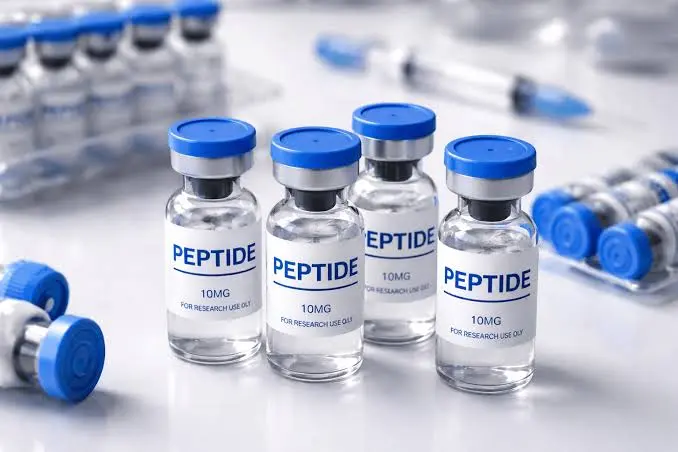
Research peptides have become increasingly easy to find online, with compounds such as semaglutide, tirzepatide and retatrutide appearing across many specialist suppliers. But finding a peptide is not necessarily the same as finding a suitable research material.
For researchers, the important questions often start with what is actually in the vial, how it has been characterised, whether the batch is properly documented and how the material has been handled before it reaches the laboratory.
A product page can provide useful information, but it should not be the only thing considered when evaluating a research peptide.
Whether the compound is being studied for its receptor activity, molecular characteristics or another research purpose, a few basic checks can make the sourcing process much more straightforward.
Start With the Identity of the Peptide
The first step may sound obvious: make sure the material is actually the compound you intend to study.
Peptides can have similar names, abbreviations or descriptions, particularly when several compounds belong to the same research area.
For example, semaglutide peptide is primarily associated with GLP-1 receptor activity, tirzepatide targets both GLP-1 and GIP receptors, while retatrutide is designed to interact with GLP-1, GIP and glucagon receptors.
Those differences matter.
Researchers should check the stated identity of the material, rather than assuming that two products are interchangeable because they are discussed within the same category.
Where appropriate, analytical information can help confirm the identity of a particular batch.
Look at Purity Information
Purity is another important consideration when evaluating research peptides.
A product may be advertised as high purity, but researchers should ideally look for supporting analytical information rather than relying entirely on a percentage displayed on a website.
The exact meaning of a reported purity figure can depend on the analytical method used. For example, chromatographic methods may provide information about the proportion of the target compound relative to detected impurities, while other analytical techniques may provide different information about identity or molecular characteristics.
This is why a certificate of analysis can be useful.
A good certificate should identify the relevant product or batch and provide information about the testing performed. Researchers should review the actual documentation rather than assuming that every certificate provides the same level of detail.
What Is a Certificate of Analysis?
A certificate of analysis, commonly shortened to COA, is a document that reports testing information for a particular batch of material.
Depending on the supplier and testing process, it may include information such as:
- Product or compound name
- Batch or lot number
- Reported purity
- Testing method
- Date of analysis
- Appearance or physical characteristics
- Other analytical results
The exact contents can vary.
For researchers, one of the most useful features is the connection between the document and the specific batch being purchased. This provides greater context than a generic statement that a particular peptide is “high purity”.
It is also worth checking whether the reported testing was performed internally or by an independent laboratory. Neither automatically guarantees that a product is suitable for every research application, but knowing how the material was tested helps researchers assess the information more appropriately.
Batch Information Matters More Than Many People Realise
Two batches of the same peptide may not necessarily be identical in every practical respect.
That does not mean that a reputable research material should vary dramatically from batch to batch. Rather, researchers should recognise that each batch represents a particular production and testing event.
Recording batch or lot numbers can therefore be valuable.
If an experiment produces an unexpected result, knowing exactly which material was used makes it easier to investigate potential causes. It also helps when experiments are repeated months later or when results are compared between different research groups.
This becomes particularly important for longer research projects where the same compound may be purchased more than once.
Check Storage and Handling Information
Peptides are biological molecules, and their stability can depend on how they are stored and handled.
Temperature, exposure to moisture, light, repeated handling and other environmental factors can all be relevant depending on the specific material.
Researchers should therefore follow the storage and handling information supplied for the particular compound rather than applying one generic rule to every peptide.
This is especially important once a material has been received. Good sourcing cannot compensate for inappropriate storage after delivery.
Researchers should also consider how the material will be handled within the laboratory and whether their procedures are consistent with the manufacturer’s or supplier’s documented recommendations.
Don’t Judge a Peptide by Its Product Page Alone
Online product descriptions are useful for basic information, but they are ultimately marketing and informational materials.
A professional-looking website does not automatically demonstrate the analytical quality of a peptide.
When comparing suppliers, researchers may want to look beyond product descriptions and ask:
Is the compound clearly identified?
Is batch information available?
Is there analytical documentation?
Is the reported purity supported by testing information?
Are storage conditions clearly explained?
Can the supplier provide additional documentation when reasonably requested?
These questions can help separate a well-documented research material from one that simply has an attractive product listing.
Consider the Supplier’s Documentation
Documentation is particularly useful when research needs to be reproducible.
A supplier that provides clear information about its products, batches, testing and handling requirements gives researchers more information to work with.
UK research-peptide suppliers such as British Peptides may be considered when comparing sourcing options, particularly where researchers want to review available product and batch documentation before selecting research materials.
However, the responsibility does not end with choosing a supplier. Researchers should still review the documentation associated with the actual material they receive.
The goal is not to find the supplier making the biggest claims. It is to find information that can be assessed objectively.
Think About Your Research Requirements
There is no single checklist that works perfectly for every research project.
The information needed may depend on what researchers are actually investigating.
For example, a study focused on receptor activity may have different analytical requirements from a project examining peptide stability or molecular interactions.
Researchers should therefore define their requirements before purchasing material.
Questions worth considering include:
- What compound is required?
- What level of characterisation is needed?
- Which analytical results are relevant?
- How important is batch-to-batch consistency?
- What storage conditions will be available?
- What documentation needs to be retained?
Having clear answers to these questions can make purchasing much more efficient.
Don’t Confuse Purity With Everything Else
A common mistake is to treat purity as the only measure of peptide quality.
Purity is important, but it is not the complete picture.
A material can have a high reported purity while researchers still need to consider identity, degradation, aggregation, residual solvents, counterions, water content or other characteristics depending on the application.
This is why analytical documentation matters.
Researchers should consider what has actually been measured rather than reducing the evaluation to one number.
In practice, the right material depends on the requirements of the experiment and the level of characterisation needed to support the conclusions being drawn.
Compare Like With Like
When comparing suppliers, it is easy to focus on price.
However, a cheaper material is not necessarily more cost-effective if the documentation is limited or the material creates uncertainty during an experiment.
Instead, researchers can compare several factors together:
Identity: Is the compound clearly identified?
Purity: What is reported and how was it measured?
Documentation: Is there a batch-specific COA or equivalent information?
Consistency: Is batch information retained?
Handling: Are storage requirements clearly communicated?
Support: Can relevant technical information be obtained when needed?
This creates a more useful comparison than simply looking at the price per vial.
What About Semaglutide, Tirzepatide and Retatrutide?
These three compounds demonstrate why careful sourcing matters.
Semaglutide, tirzepatide peptide uk and retatrutide are all associated with modern metabolic peptide research, but they have different receptor profiles.
Semaglutide is primarily associated with GLP-1 receptor activity. Tirzepatide acts on GLP-1 and GIP receptors, while retatrutide is designed to activate GLP-1, GIP and glucagon receptors.
A researcher comparing these compounds therefore needs to be certain that the material matches the intended research question.
The name on a product page is only the starting point.
Keep Records From the Beginning
Good record-keeping can make peptide research significantly easier to reproduce.
Researchers may want to retain copies of certificates of analysis, batch numbers, supplier information, dates of purchase, storage conditions and relevant handling notes.
These records can become valuable later if an experiment needs to be repeated or if results differ between batches.
For longer projects, documenting this information from the beginning is generally easier than trying to reconstruct it months later.
For researchers reviewing UK sourcing options, Pure Peptides UK can also be considered alongside other suppliers, with the same approach of checking product identity, documentation and batch information before making a decision.
The Bigger Picture
Choosing a research peptide should involve more than finding a product with the right name.
Identity, purity, analytical testing, batch information, storage and documentation all contribute to a clearer understanding of what is actually being studied.
This is particularly important as interest in compounds such as semaglutide, tirzepatide and retatrutide continues to grow. With more products available online, researchers have more choice than ever, but that also makes careful evaluation more important.
The best approach is to treat sourcing as part of the research process itself.
Rather than asking only, “Which peptide should I buy?”, a better question is:
“What information do I need to know about this material before I use it in research?”
That shift in thinking can help researchers make better-informed decisions, maintain stronger records and produce results that are easier to interpret and reproduce.
Research disclaimer: This article is provided for general educational and research-information purposes only. It is not medical advice and does not provide treatment recommendations or dosing instructions. Research peptides should be evaluated, stored and handled according to applicable regulations, laboratory procedures, safety requirements and relevant supplier documentation.
Also Read
