


Commercial buildings do not have to sacrifice comfort to lower heating and cooling costs. In fact, many of the best energy-saving strategies also improve temperature consistency, airflow, humidity control, and overall occupant comfort.
HVAC systems often consume a large share of a commercial building’s energy, especially when equipment operates longer than necessary or works against airflow and control problems. However, building owners and facility managers can reduce waste by improving schedules, maintaining equipment, balancing airflow, and using smarter controls.
The goal should not be to simply run the HVAC system less. Instead, property managers should make the system operate more efficiently and only when the building actually needs heating or cooling.
With the right strategy, businesses can reduce utility expenses while keeping offices, stores, warehouses, schools, and other commercial spaces comfortable throughout the year.
Understand Where HVAC Energy Waste Starts
Before making major upgrades, facility managers should first identify where energy waste occurs.
Several common issues increase HVAC operating costs, including:
- Equipment running during unoccupied hours
- Dirty filters and coils
- Poor airflow
- Incorrect thermostat settings
- Damaged ductwork
- Unbalanced zones
- Outdated controls
- Improperly sized equipment
- Excessive outdoor air
- Worn mechanical components
For example, an office building may continue cooling conference rooms long after employees leave for the day. Similarly, a warehouse may heat rarely used storage sections to the same temperature as occupied workspaces.
These situations increase energy use without improving comfort.
Therefore, building owners should review both equipment performance and how occupants actually use the property.
Start With a Complete HVAC System Evaluation
Replacing major equipment should not always be the first step.
Instead, commercial property managers should begin with a detailed system evaluation.
An HVAC professional can inspect equipment condition, airflow, controls, operating schedules, and common comfort complaints.
The assessment may include:
- Rooftop units
- Air handlers
- Boilers
- Furnaces
- Cooling equipment
- Ductwork
- Thermostats
- Dampers
- Filters
- Exhaust systems
- Ventilation equipment
In addition, managers should review utility bills and maintenance records.
A sudden increase in electricity or gas consumption may indicate that equipment is working harder than normal.
Likewise, repeated repair calls can reveal that one part of the system needs attention.
By collecting this information first, property owners can make better decisions instead of spending money on unnecessary upgrades.
Match HVAC Schedules to Occupancy
One of the easiest ways to save energy involves improving operating schedules.
Many commercial HVAC systems run longer than necessary because nobody updates the schedule after business hours change.
For example, a building may remain conditioned from 6 a.m. until 10 p.m. even though employees only work from 8 a.m. to 6 p.m.
Reducing unnecessary operating hours can lower energy use significantly.
However, facility managers should make adjustments carefully.
The HVAC system still needs enough time to bring the building to a comfortable temperature before people arrive.
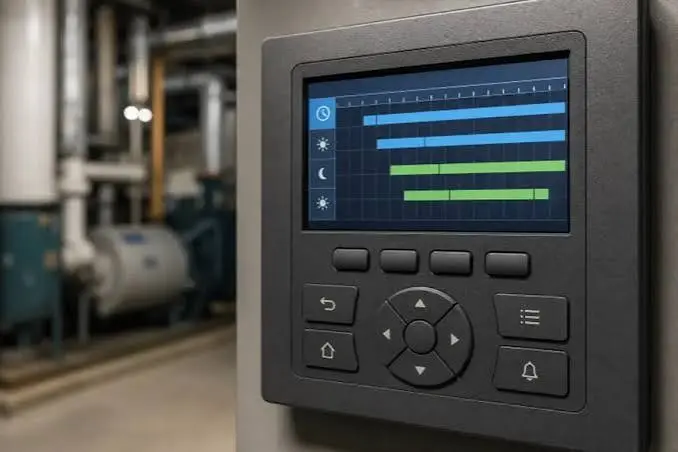
Programmable thermostats, building automation systems, and smart controls can make this process easier.
These systems can automatically adjust operation based on:
- Business hours
- Weekends
- Holidays
- Seasonal schedules
- Occupancy levels
- Outdoor temperatures
As a result, the HVAC system can avoid wasting energy while still maintaining comfort during occupied periods.
Use Zoning to Condition the Right Spaces
Commercial buildings often contain rooms with very different heating and cooling needs.
A conference room may remain empty for most of the day, while a customer-facing area stays busy.
Similarly, storage areas may not require the same temperature as offices.
Zoning allows facility managers to condition spaces more precisely.
Instead of heating or cooling the entire building equally, the system can adjust output according to actual use.
Effective zoning may help:
- Reduce unnecessary HVAC runtime
- Improve comfort in occupied spaces
- Prevent overheating or overcooling
- Support different room schedules
- Improve temperature control
However, zoning systems must operate correctly.
Faulty dampers, thermostats, or control settings can create uncomfortable hot and cold spots.
Therefore, technicians should inspect and test zoning components regularly.
Improve Airflow Before Increasing Cooling or Heating
Poor airflow can make occupants feel uncomfortable even when the HVAC equipment itself works properly.
For example, a room may feel too warm because it receives insufficient supply air.
In response, employees may lower the thermostat.
The HVAC system then works harder while the underlying airflow problem remains.
Common airflow problems include:
- Dirty filters
- Blocked supply vents
- Obstructed return grilles
- Damaged ducts
- Leaking duct connections
- Dirty coils
- Incorrect fan settings
- Closed dampers
Facility managers should correct these problems before increasing heating or cooling output.
Proper airflow allows conditioned air to reach occupied areas efficiently.
Consequently, the system can maintain comfort without excessive runtime.
Keep Filters and Coils Clean
Routine maintenance plays an important role in commercial HVAC efficiency.
Dirty filters restrict airflow.
When this happens, fans must work harder to move air through the system.
At the same time, clogged filters can reduce comfort and contribute to poor indoor air quality.
Cooling and heating coils also need regular attention.
Dirt buildup can reduce heat transfer, forcing equipment to operate longer to reach the desired temperature.
Therefore, maintenance teams should inspect filters and coils regularly.
The exact maintenance schedule depends on building type, system usage, and environmental conditions.
For example, a busy commercial facility may need more frequent filter changes than a lightly occupied office.
Keeping components clean helps the system operate more efficiently and can also reduce unnecessary mechanical wear.
Use Smart Controls to Reduce Unnecessary Operation
Modern HVAC controls can help businesses manage energy use more precisely.
Traditional thermostats provide basic temperature control, but newer systems offer much more information.
Building automation systems can monitor equipment operation, temperatures, schedules, and system faults from a central platform.
Useful control features may include:
- Occupancy sensors
- Remote temperature monitoring
- Automated scheduling
- Variable-speed fan control
- Equipment alarms
- Trend reporting
- Outdoor temperature adjustment
- Zone-by-zone control
These tools allow facility managers to identify inefficient operating patterns.
For example, data may reveal that one air handler runs continuously overnight.
Managers can then investigate the cause instead of waiting for higher energy bills.
Smart controls also help building teams respond more quickly when equipment begins behaving abnormally.
Consider Variable-Speed Equipment
Traditional HVAC motors often operate at full speed even when the building needs only partial heating or cooling.
Variable-speed equipment provides another option.
Variable-frequency drives and variable-speed motors can adjust output based on actual demand.
When the building requires less airflow, the system can reduce fan speed.
This can lower electricity consumption and create more stable indoor conditions.
Variable-speed operation may also reduce sudden temperature changes because the system can make gradual adjustments.
However, these technologies work best when technicians configure them correctly for the building.
Proper design and commissioning remain important.
Balance Ventilation and Energy Efficiency
Commercial buildings need outdoor air to maintain good indoor air quality.
However, bringing in too much outdoor air can increase heating and cooling loads.
During hot weather, the HVAC system must cool and dehumidify incoming air.
During winter, it must heat cold outdoor air.
Therefore, property managers should balance ventilation requirements with energy performance.
HVAC technicians can inspect outside-air dampers and ventilation settings to confirm that the system delivers appropriate airflow.
In buildings with high ventilation requirements, energy recovery systems may help.
These systems can transfer heat or cooling energy between outgoing and incoming air streams, reducing the amount of energy needed to condition fresh air.
As a result, buildings can maintain ventilation without wasting as much heating or cooling energy.
Manage Humidity Alongside Temperature
Comfort depends on more than temperature.
Humidity also affects how occupants feel.
A building may feel uncomfortable even at the correct temperature if indoor humidity remains too high.
In response, people may lower thermostat settings unnecessarily.
This increases cooling costs.
Proper humidity management allows the HVAC system to maintain comfortable conditions without excessive cooling.
Technicians may inspect cooling coils, drainage systems, ventilation rates, and equipment sizing to determine why humidity remains high.
In some situations, dedicated dehumidification equipment may provide better control.
Maintaining balanced humidity can improve comfort while reducing unnecessary HVAC operation.
Preventive Maintenance Supports Long-Term Savings
Preventive maintenance should form part of every commercial energy-saving plan.
Small mechanical issues can gradually reduce efficiency.
For example, worn belts can affect fan performance, while dirty coils can reduce heat transfer.
Likewise, faulty sensors may cause equipment to run longer than necessary.
A preventive maintenance program may include:
- Checking filters
- Cleaning coils
- Inspecting belts and bearings
- Testing thermostats
- Checking electrical connections
- Inspecting dampers
- Testing control sequences
- Cleaning drain pans
- Checking refrigerant performance
- Inspecting ducts
Routine service allows technicians to correct minor problems before they increase energy consumption or cause equipment failure.
Know When HVAC Replacement Makes Sense
Maintenance can improve existing equipment, but every HVAC system eventually reaches the end of its useful service life.
Older systems may require frequent repairs or consume significantly more energy than newer equipment.
Replacement may make sense when:
- Repair costs continue increasing
- Equipment breaks down frequently
- Replacement parts become difficult to find
- Energy bills remain high after maintenance
- Temperature control becomes unreliable
- Equipment no longer matches building needs
However, facility managers should evaluate total ownership costs rather than focusing only on equipment price.
Installation, controls, maintenance, energy use, and expected service life all matter.
In some situations, repairing airflow or control problems may provide better value than immediate replacement.
Measure Energy Performance After Changes
Energy improvements should produce measurable results.
Facility managers can track:
- Monthly utility consumption
- Equipment runtime
- Indoor temperatures
- Humidity levels
- Energy costs
- Occupant comfort complaints
It often helps to establish a baseline before making changes.
Then, after adjusting schedules, airflow, controls, or equipment, managers can compare the results.
This approach helps determine which changes actually produce savings.
It also prevents businesses from making decisions based only on assumptions.
Lower HVAC Costs Without Reducing Comfort
Commercial HVAC energy savings do not require uncomfortable indoor temperatures.
In many cases, the best savings come from reducing waste rather than reducing comfort.
Better operating schedules, proper zoning, clean filters, balanced airflow, smart controls, effective ventilation, and preventive maintenance can all improve system performance.
Facility managers should start by understanding how their building operates and where energy is being wasted.
From there, they can make targeted improvements and measure the results.
Over time, these practical changes can lower utility expenses, reduce equipment wear, and create more consistent indoor conditions.
A well-managed commercial HVAC system should do more than heat and cool the building. It should deliver dependable comfort while using energy as efficiently as possible.
Also READ
