


Every contractor is aware of the sensation: a bid is going out, the cellphone stays quiet, and the reasons why are in no way entirely clear. Was the charge too high? Too vague? Missing something the consumer expected to look for? Behind nearly every misplaced activity or shrinking earnings margin sits the identical root reason, which was in no way proper, first of all. Estimating is the quiet engine that drives whether or not an assignment makes cash, breaks even, or slowly drains an organization’s reserves. Getting it right is not a small operational detail; it’s the difference between an enterprise that grows regularly and one that stalls out chasing work it can in no way possibly have enough money to complete.
The Hidden Price of a Rough Guess
Most estimating mistakes don’t announce themselves loudly. They show up months later, buried in a change order, a material scarcity, or a hard work overrun no person budgeted for. A contractor relying on hard guesswork or outdated spreadsheets is largely making a bet on the organization’s cash flow and intuition. That would possibly pay off now and then, but it does not often hold up across dozens of projects a year. Builders running in aggressive markets, such as corporations attempting to find Construction Estimating Services New York vendors, are more and more conscious that a single miscalculated quantity takeoff can wipe out a whole project’s earnings. The stakes are best developed as fabric fees and hard-hat prices continue shifting from one sector to the next.
- Missed quantities that surface only after materials are ordered
- Labor hours calculated on assumptions instead of real production charges
- Contingency numbers pulled from addition as opposed to assignment-unique risk
The pattern repeats throughout trades and task sizes. Small mistakes compound, and by the point a task wraps, the “income” a contractor predicted has quietly evaporated into unplanned fees nobody flagged early enough to prevent
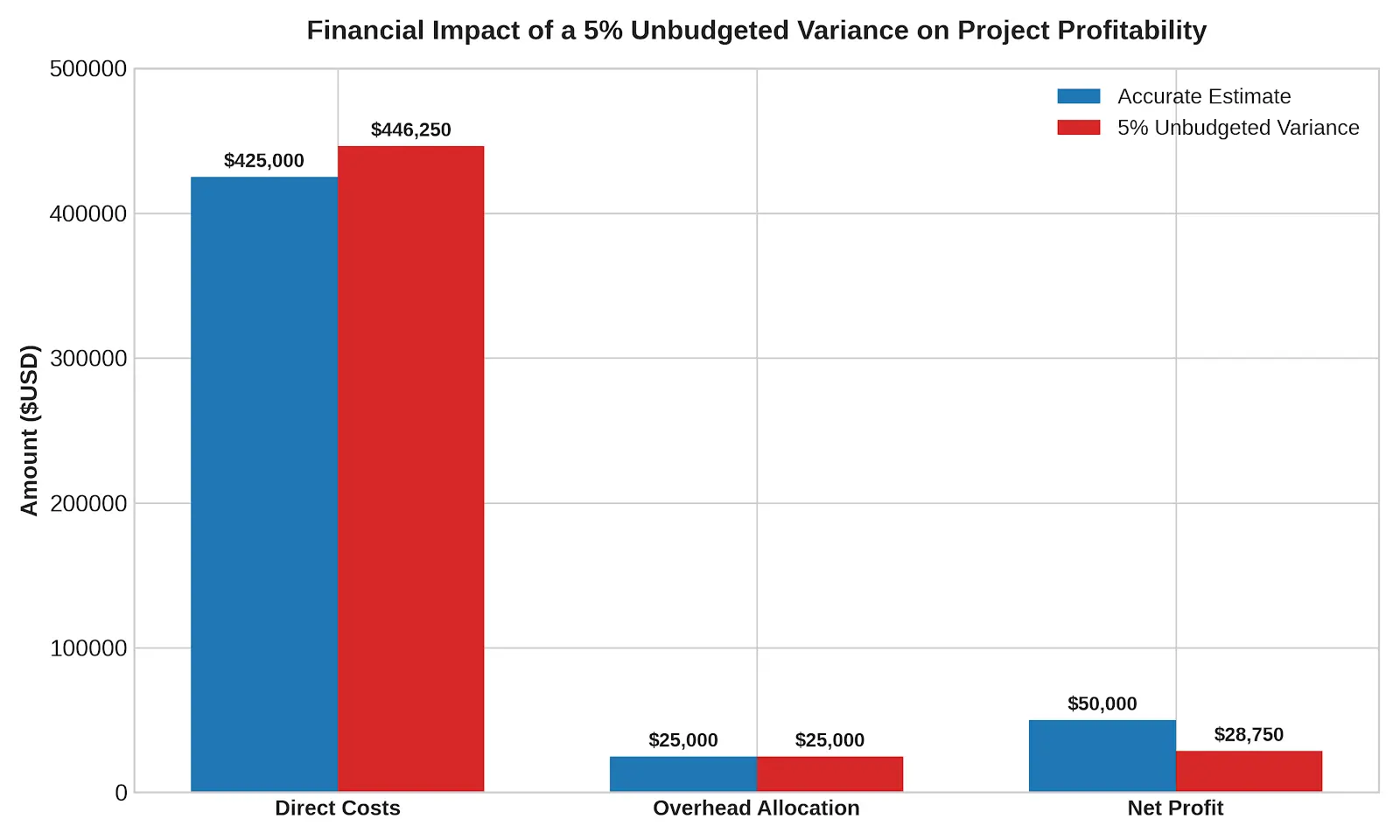
| Financial Metric | Accurate Estimate | 5% Unbudgeted Variance | Financial Impact |
| Contract Value (Bid Price) | $500,000 | $500,000 | No change in revenue |
| Estimated Direct Costs | $425,000 | $446,250 | +$21,250 unexpected cost |
| Overhead Allocation (5%) | $25,000 | $25,000 | Fixed operational cost |
| Projected Net Profit | $50,000 (10%) | $28,750 (5.75%) | 42.5% reduction in net profit |
Why a Trained Estimator Changes the Outcome
Bringing in a devoted estimating professional is not about outsourcing effort; it’s about adding a layer of precision that in-house teams, stretched across scheduling, website online supervision, and purchaser calls, clearly do not have time to deliver. An expert who estimates full-time develops a sharper eye for portions, waste factors, and pricing traits because this is the entirety of their focus. Manufacturing and commercial builds bring their own layer of complexity, and corporations handling large-scale plant creation regularly turn to specialised Factory Estimating Services to account for equipment foundations, application runs, and technique-specific line items that standard estimating software tends to overlook. That sort of specialized interest does not often exist within a generalist in-house workflow.
- A committed attention to takeoffs without scheduling or website distractions pulling interest away
- Familiarity with modern-day material and hard work pricing across a couple of areas
- Consistent formatting that makes bids simpler for clients to evaluate and approve
The result isn’t just a more accurate number; it is a bid that customers consider as it holds together under scrutiny.

Precision That Extends Beyond the Numbers
Accuracy in estimating doesn’t stop at value columns. It touches layout coordination, drawing quality, and how well a task’s technical details suit what is simply priced. A bid built on incomplete or poorly designated drawings is a bid constructed on sand, regardless of how carefully the numbers were calculated. This is where design aid turns into a part of the accuracy equation. Many firms now choose to outsource CAD drafting services so estimators are working from clear, coordinated drawings instead of sketches full of gaps and assumptions a small shift that enormously tightens the very last numbers. Better drawings mean fewer explanation requests, fewer assumptions baked right into a bid, and a suggestion that stands up while a patron’s very own reviewer starts to review, asking pointed questions.
- Cleaner drawings reduce the guesswork estimators are compelled to fill in
- Fewer revision cycles between drafting and pricing groups
- Bids that read as professional, coordinated, and prepared for approval
When drafting and estimating work in sync, the entire proposal feels tighter, and clients note that difference without delay.

The Compounding Effect on Business Growth
Winning one correct bid is ideal. Winning bids continually, on the right jobs, on the proper margins, is what truly grows a commercial enterprise. Contractors who invest in disciplined estimating processes generally tend to look for a shift in the form of work; they entice fewer distressed, underpriced projects and attract customers who feel a sense that is clean, defensible, and sensible from day one. Reputation builds quietly around reliability, and referrals begin flowing from customers who in no way had to cope with a surprise alternate order.
- Stronger win quotes on bids which are neither underpriced nor inflated
- Healthier coins go with the flow because fewer projects run over price range abruptly
- A developing reputation that brings in repeat customers and referrals
Growth, in this experience, isn’t about chasing greater bids. It’s about winning the right ones and executing them without financial surprises along the way.
Building a Sustainable Estimating Process
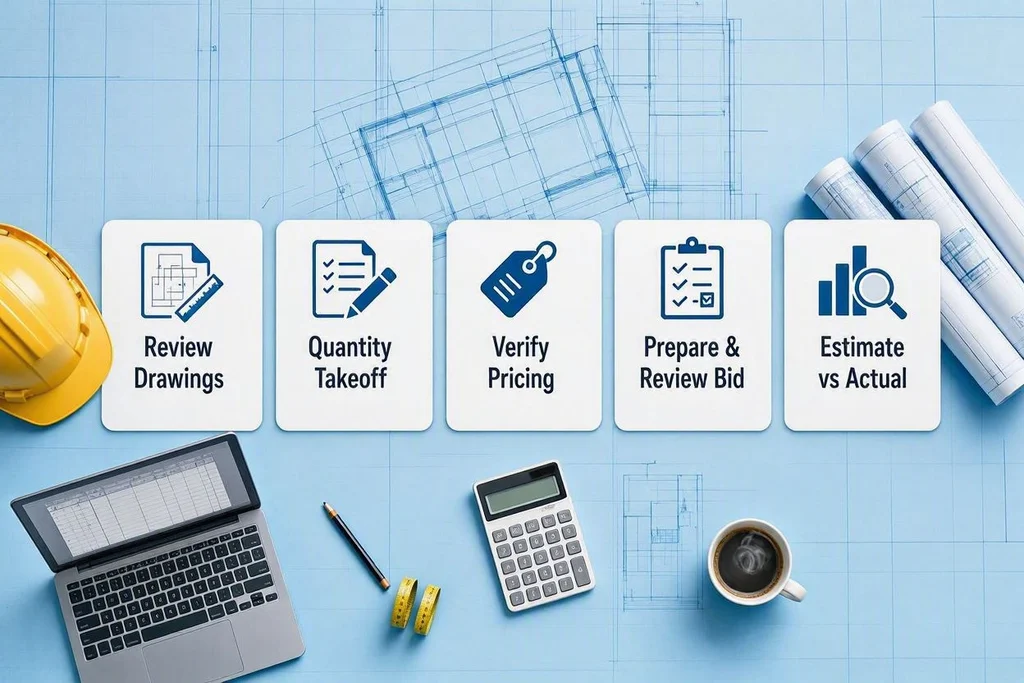
None of this takes place without an appropriate estimate. It comes from building a repeatable system: standardized templates, steady evaluation checkpoints, and a habit of evaluating expected expenses against real project results once the painting is done. That feedback loop is what separates contractors who enhance yr over yr from people who keep making the same pricing errors on each new task. Small, consistent refinements to how a company estimates generally tend to count for some distance more, over the years, than any unmarried heroic attempt on one bid.
- Standardized estimate templates that lessen inconsistency among projects
- Regular post-project reviews evaluating expected as opposed to real expenses
- A documented procedure new team individuals can analyze quickly
A procedure like this does not simply defend margins; it becomes a proper competitive benefit. It really is difficult for less disciplined competition to copy.
Final Thoughts
Bid accuracy isn’t always a luxury reserved for huge companies with devoted estimating departments. It’s a foundational addiction that any contractor, no matter the size, can incorporate into their operations. The organizations that grow steadily are not always the ones bidding the most jobs; they may be those bidding cleverly, supported by accurate numbers, coordinated drawings, and a process that learns from each completed mission. Investing in that subject nowadays will pay dividends in stronger margins, stronger customer relationships, and a reputation that continues to bring the proper work back.
FAQs
1. Why do so many contractors conflict with bid accuracy?
Most inaccuracies come from time strain and old pricing records. When estimates are rushed or primarily based on old spreadsheets, portions and costs drift far from real-world conditions.
2. How can faulty estimating cost a contractor a great deal?
It varies by challenge size; however, even a small percentage of blunders in labor or material quantities can erase a whole activity’s income margin as soon as change orders and delays are factored in.
3. Is expert estimating best beneficial for massive industrial initiatives?
No. Residential remodelers, small trendy contractors, and area-of-expertise trades all benefit from more disciplined estimating, given that tight margins make every miscalculation more painful.
4. How does drawing quality affect estimating accuracy?
Estimators work without delay from drawings to calculate quantities. Incomplete or poorly coordinated drawings pressure estimators to wager, which introduces mistakes before pricing even starts.
5. What’s step one toward enhancing estimating accuracy?
Start by standardizing how estimates are built and reviewed, then track actual undertaking costs against unique estimates. That feedback loop is precisely where the process needs to tighten.
Also Read

Pingback: What Traders Should Know About Crypto Prop Trading Programs