


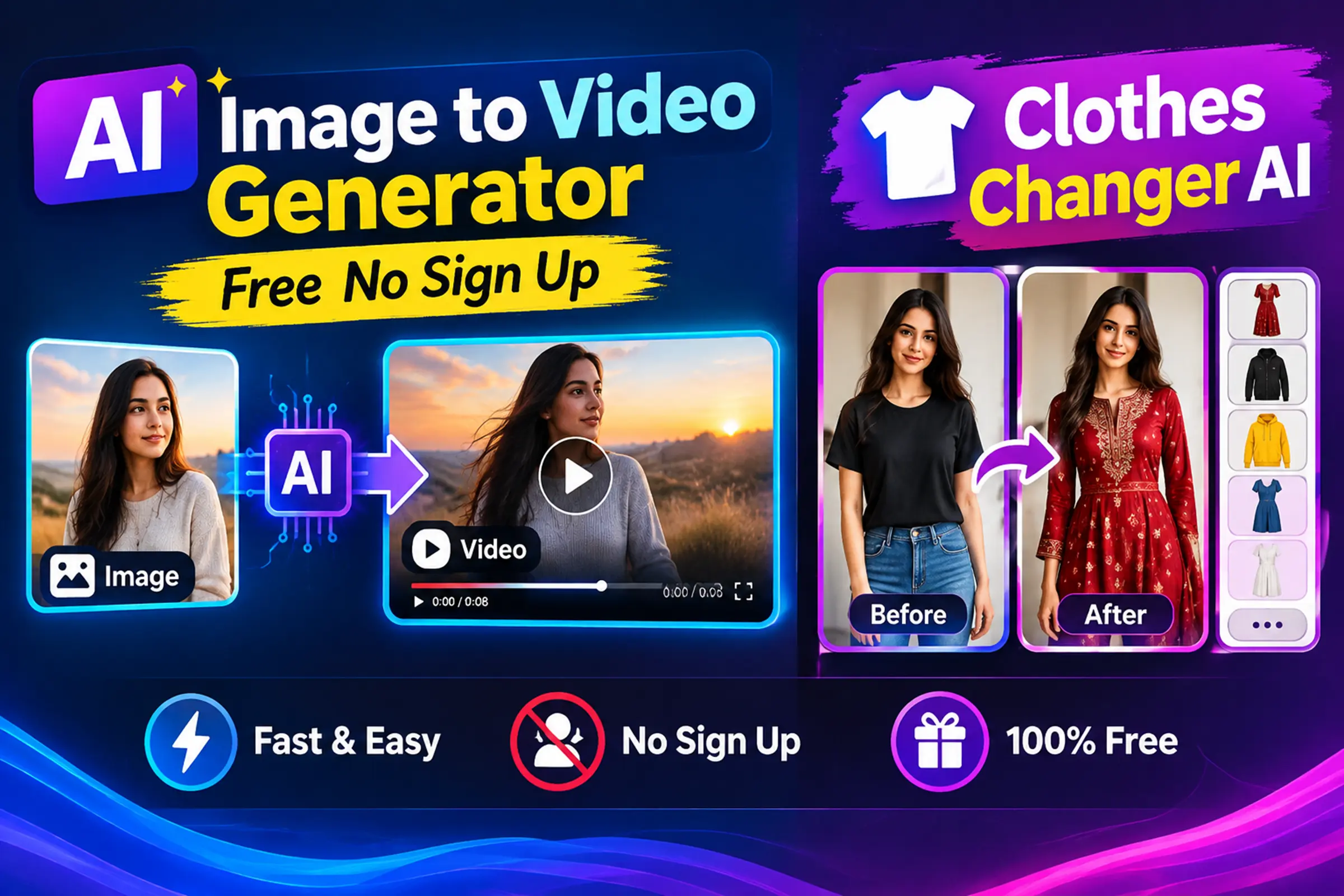
Creating attractive visual content once required a camera, lighting equipment, models, editing software, and plenty of time. Today, artificial intelligence is changing that process by making image and video creation accessible to almost anyone. A single photograph can become a short animated clip, while an existing outfit can be replaced with another style without arranging an entirely new photoshoot.
These developments are especially useful for fashion creators, online sellers, social media managers, designers, and anyone who wants to experiment with different visual ideas. Two technologies that can make this process easier are an AI image to video generator free no sign up and a clothes changer AI tool.
Turning Still Images into Dynamic Videos
A photograph captures only one moment, while video can communicate movement, atmosphere, and a stronger sense of context. Image-to-video technology allows users to start with an existing picture and generate motion from it.
Instead of recording a new video from scratch, users can upload an image and describe what they want to happen. The AI can then interpret the scene and create movement based on the supplied instructions.
For example, a fashion photograph could be transformed into a short clip showing a model making a subtle turn. A product image could become a promotional animation with camera movement. A travel photograph might be converted into a scene with gentle motion.
An AI image to video generator free no sign up can be particularly convenient for users who want to experiment without going through a complicated registration process. Browser-based tools can allow creators to upload an image, provide a prompt, and generate a video directly from the same workflow.
Why Image-to-Video Tools Are Useful
One of the biggest advantages of image-to-video technology is that it can extend the usefulness of existing images. A creator does not necessarily need to produce completely new footage for every social media post.
For instance, an online clothing store may already have high-quality product photographs. Instead of using the same static images repeatedly, the store can turn selected pictures into short promotional clips.
Social media creators can also use animated photographs for reels, stories, advertisements, and other short-form content. The ability to create movement from a single image can provide additional creative possibilities while reducing the amount of traditional filming required.
The quality of the result depends heavily on the source image and the instructions provided to the AI. A clear photograph with a well-defined subject generally gives the system more useful information to work with.
What Makes a Good Source Image?
The starting image plays an important role in the final video. When the subject is clearly visible and the photograph has sufficient resolution, an AI video system has more visual information to analyze.
For fashion content, it helps to use an image where the clothing is visible without excessive obstruction. Good lighting can also make important details such as colors, patterns, and fabric structure easier to preserve.
Creators should also consider composition. A simple background and clearly positioned subject can make it easier to generate natural-looking movement.
Before uploading an image, users should make sure they have the necessary rights or permission to use it. This is particularly important when creating commercial content or working with photographs belonging to other people.
Experimenting with Digital Outfits
Changing clothing digitally has become another practical application of generative AI. A clothes changer AI tool can modify the clothing shown in a photograph while attempting to preserve the person’s pose, appearance, lighting, and surrounding environment.
Instead of taking multiple photographs of the same model wearing different outfits, creators can use an existing image as the starting point for different fashion concepts.
For example, a casual shirt could be changed into a formal jacket, or a summer outfit could be replaced with a winter-style look. Modern AI editing systems can also work with reference images and text instructions to guide the desired clothing style.
How a Clothes Changer AI Works
The basic process is relatively straightforward.
First, the user uploads a suitable photograph. The system analyzes the person, clothing, pose, background, lighting, and other visual elements. The user can then describe the desired outfit or provide a reference image.
The AI generates a revised version of the photograph with the requested clothing. Depending on the platform, users may be able to adjust colors, materials, patterns, garment types, and other details.
Some tools are designed specifically for fashion workflows, while others include clothing replacement as part of a broader image-editing system. Current platforms can use image-to-image generation to maintain elements such as facial identity, body proportions, lighting, and background while modifying clothing.
Combining Clothing Changes with Video
The most interesting workflow comes from combining both technologies.
A creator can begin with a photograph, use a clothes changer AI tool to create a new outfit, and then send the edited image to an image-to-video system. The result can be a short fashion clip created without recording a new scene.
This workflow can be useful for:
- Fashion lookbooks
- Social media reels
- Clothing advertisements
- Product presentations
- Style concepts
- Online store visuals
- Creative portfolios
Some current AI platforms specifically connect outfit replacement with image-to-video generation, allowing an edited fashion image to be animated afterward.
Writing Better Prompts
The instructions given to an AI tool can have a significant impact on the output. Instead of using a vague command such as “change the clothes,” a more detailed prompt can describe the desired garment, color, material, and overall style.
For example, a creator might request a tailored navy blazer, white shirt, straight trousers, and clean studio lighting. If movement is being generated afterward, the creator can also describe the desired camera action or subject movement.
Clear instructions reduce ambiguity and give the AI a better understanding of the intended result.
However, prompts should not become unnecessarily complicated. Start with the most important requirements and add details only when they are useful.
Tips for More Natural Results
AI-generated fashion images and videos can sometimes contain visual inconsistencies. Small details such as hands, buttons, patterns, accessories, or fabric edges may not always appear perfectly.
To improve results, start with a high-quality source image and avoid photographs where the clothing is heavily covered. Keep the requested changes realistic and check the generated result carefully.
It can also help to generate several versions rather than expecting the first result to be perfect. Comparing different outputs allows creators to select the version that best matches their intended style.
When producing videos, subtle movement may sometimes look more natural than excessive motion. Simple camera movements, gentle turns, or controlled animation can help preserve the original appearance of the subject.
Useful for Creators and Online Businesses
AI image and fashion tools can provide practical benefits beyond personal experimentation. Small businesses can create visual concepts before investing in a professional photoshoot. Designers can explore different clothing ideas quickly, while social media creators can produce multiple variations from a single source image.
Online stores can also experiment with product presentations. Instead of preparing a completely separate photoshoot for every creative concept, an AI workflow can help generate preliminary visuals for campaigns and product pages.
These tools do not eliminate the need for professional photography in every situation. Instead, they provide another option for creating and testing visual ideas quickly.
A Faster Creative Workflow
The combination of image-to-video generation and AI clothing editing creates a flexible workflow for modern content creation. A creator can start with one photograph, experiment with several outfits, select a preferred version, and then animate the final image.
An AI image to video generator free no sign up can make experimentation convenient for users who want to test image animation without a lengthy setup process. Meanwhile a clothes changer AI can provide additional flexibility by allowing different fashion concepts to be explored from an existing photograph.
As these technologies continue developing, creators can expect more control over clothing details, motion, camera direction, and visual consistency. For now, the best results come from combining a strong source image, clear instructions, careful editing, and human review.
Final Thoughts
AI is making visual content creation more flexible than ever. Turning a photograph into a video can give old images a new purpose, while digital outfit editing can help creators explore fashion ideas without repeatedly arranging new photoshoots.
By combining an AI image to video generator free no sign up with a reliable clothes changer AI, users can build a simple workflow for creating fashion visuals, social media content, product presentations, and creative experiments.
The technology works best when treated as a creative assistant rather than a replacement for careful decision-making. With good source images, precise prompts, and a little experimentation, even a single photograph can become the starting point for many different visual concepts.
Also Read
