


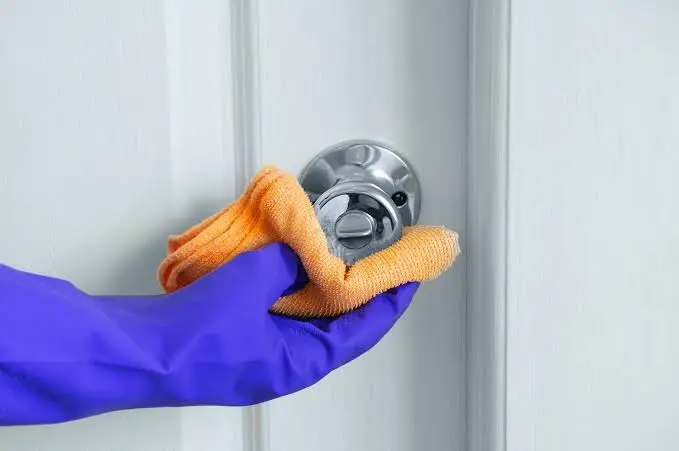
Look closely at the plate around a light switch and you may notice a dull, slightly grey halo where fingers land every day. The door handle by the kitchen has a similar patch, a bit tacky and a shade darker than the rest of the metal. Nothing here looks dirty enough to demand attention, and that is why these spots tend to be wiped last, if at all.
The dirt is the easy part. The finish is harder. Painted plates, lacquered brass, brushed nickel, and plastic all react differently to the same spray, so a quick wipe, whether done by a homeowner or by house cleaning services visiting on a schedule, can leave dull patches or worn paint that a month of grime never would have.
Whoever does the wiping, whether that’s you or a crew from CJS Cleaning Solutions, the same finish rules apply, and they are worth knowing before the cloth comes out.
Why These Surfaces Collect a Film Instead of Dust
A handle or switch is touched dozens of times a day, and every touch leaves a thin transfer of skin oil, hand lotion, cooking residue, and whatever else was on the fingers. One touch is invisible. Weeks of them build into a film that catches household dust and turns the surface grey and slightly sticky.
That film explains why dry dusting does nothing here. A dry cloth just slides over it. It also explains why the grime concentrates in predictable places: the edge of the switch plate nearest the doorway, the underside of a lever handle, and the flat of a cabinet pull where a thumb rests.
Searching for house cleaning services charlotte nc turns up plenty of task lists that cover door handles and switches in a single line. That line hides how different the surfaces are. A rubbed-smooth plastic plate, a lacquered brass lever, and a painted wooden door edge each need their own handling, and the people doing the cleaning need to know which is which.
Match the Cleaner to the Finish
Start with the gentlest option: a soft microfibre cloth, slightly damp with warm water and a drop of mild dish soap, wrung out until it isn’t dripping. This handles most oily film on plastic, painted plates, and sealed wood. Dry the surface immediately afterwards with a second cloth, since leftover soap is itself a film.
Brass deserves a pause. Much of the brass sold today is lacquered, and the lacquer is the only thing protecting the metal. Abrasive pads and polishes wear through it, and once the coating is breached the brass beneath darkens in patches. Some older hardware is deliberately unlacquered and changes colour with age, and polishing that away removes a finish some owners want. If you are unsure which you have, test a hidden spot first, or use only a damp cloth.
Brushed nickel and stainless steel have a grain, and wiping along the grain keeps scratches from showing. Chrome tolerates more but shows streaks easily. Oil-rubbed bronze and other dark “living” finishes are the most delicate of all. Cleaners with acid or ammonia can strip them in a single wipe, so plain soapy water is the sensible limit.
Painted door edges and switch plates wear through if scrubbed. If paint transfers to the cloth, stop. The coating is already worn, and more cleaning will enlarge the bare patch.
Switches and Outlets Need a Different Kind of Care
Anything that carries electricity changes the rules. Never spray a cleaner onto a switch plate, a dimmer, or an outlet cover. The liquid runs down behind the plate where you can’t see it or dry it, and moisture inside a wall box is a genuine hazard.
Apply a small amount of cleaner to the cloth, not the wall, and wring it nearly dry. Wipe only the face of the plate and the switch toggle, keeping the cloth clear of the edges, screw heads, and any gaps around the switch. If a plate is cracked, loose, or discoloured by heat, leave it alone and ask a licensed electrician to look at it, because no cleaner will correct that.
For extra caution, switch off the circuit at the breaker before cleaning a plate that is heavily soiled. Dry the plate completely before restoring power. Smart switches, touch panels, and dimmers with sensitive surfaces should be cleaned only as the manufacturer directs, and many specify a dry or barely damp cloth.
Cleaning Versus Disinfecting
These two jobs are often treated as one, but they aren’t. Cleaning removes the film of oil and soil. Disinfecting uses a product to reduce germs on a surface that has already been cleaned, and most disinfectants work only if the surface stays visibly wet for a set contact time stated on the label.
For many households, regular cleaning is enough most of the time. Disinfecting makes sense when someone in the home is ill, or after handling raw meat near cabinet handles. Even then, check that the product is safe for the finish, because many disinfectants are harsh on lacquered metal and painted surfaces. Never mix products, and bleach in particular must never be combined with ammonia or acidic cleaners. Keep the room ventilated while you work.
Wiping with a disinfectant over a greasy film also does little. The film shields what is underneath, which is why cleaning comes first.
Fitting These Surfaces Into a Routine
None of this needs a daily schedule. A reasonable pattern is a quick pass over the handles and switches people touch most, such as the kitchen, bathroom, and entry door, during regular cleaning, with the rarely used rooms done less often. A household with young children or pets will see film build faster around low handles and cabinet doors.
If the weekly cleaning is handled by CJS Cleaning Solutions, a short note about which handles are unlacquered brass or have a delicate oil-rubbed finish helps prevent the wrong cloth or product from touching them. The same note is useful for any helper, a relative, or a babysitter who tidies up now and then.
Keep one cloth for these jobs and wash it regularly. A cloth carrying kitchen grease will leave a fresh film on a pristine handle, and a gritty one will scratch it.
Small Surfaces, Specific Methods
High-touch surfaces collect grime quickly and are damaged just as quickly by the wrong product, which is why a little knowledge about each finish goes a long way. Test a hidden spot, use the mildest cleaner that works, keep liquid away from anything electrical, and dry as you go.
The same habits apply if house cleaning services handle the weekly round: a short list of what each handle and plate is made of will do more for these surfaces than any stronger product.
Also Read
