


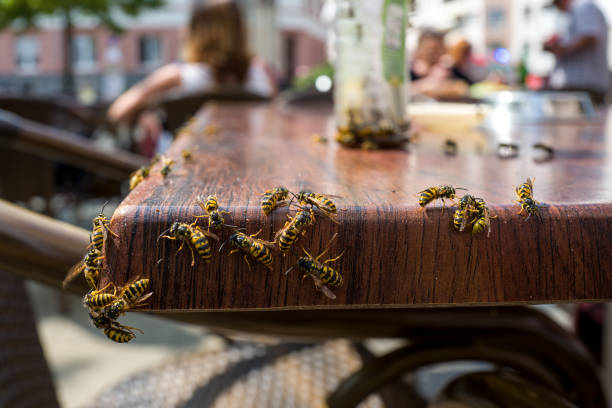
An outdoor reception or corporate barbecue can run smoothly until the carving station opens or dessert is unveiled. Within minutes, a handful of curious yellowjackets escalates into a swarm. Guests duck under tables, servers hesitate around chafing dishes, and someone inevitably gets stung.
For catering teams and event planners, a sudden wasp invasion is an operational crisis. You have minutes to protect food, safeguard attendees, and maintain service flow without inciting panic. Swatting with menus or spraying chemical repellents near food only escalates insect aggression and violates health standards.
Managing unexpected wasps requires an objective decision framework. By recognizing what triggers sudden swarming and executing proactive containment protocols, catering crews can defuse the situation, protect food stations, and preserve the guest experience.
Phase 1: The 60-Second Triage (Relocate vs. Defend in Place)
To handle a sudden wasp swarm, catering managers must immediately determine whether the insects are foraging scavengers that can be diverted or aggressive defenders from a disturbed ground nest that require indoor relocation.
Not all wasp activity carries the same risk profile:
- Foraging Scavengers: Wasps hover low over plates, land directly on meats or fruit, and ignore guests unless swatted. This scenario calls for active defense in place.
- Disturbed Nest Defense: Wasps fly erratically at head height, bounce off people, and sting without provocation. A guest likely disturbed a subterranean nest nearby.
If wasps exhibit defensive nest aggression, initiate an emergency event pest response immediately: pause service, guide guests to an indoor or screened space, and cordon off the area.
Phase 2: Fortifying the Buffet Line Against Scavengers
Protecting an active food service line requires immediately covering exposed proteins and simple sugars, deploying chafing dish roll-tops, and clearing open carving stations.
Wasps possess an acute sense of smell. Warm roasted meats, barbecue sauces, and fruit glazes release volatile scent molecules that act as an open beacon. Once scout wasps feed, they return to their colony to recruit foragers.
Implement immediate buffet line insect protection:
- Enclose Chafing Pans: Lower roll-top chafing dish lids between guests rather than leaving pans open.
- Cover Carving Stations: Pause open-air carving. Move roasted meats under domed covers or carve inside a prep tent.
- Protect Beverage Dispensers: Cap open juice, sangria, and punch dispensers with clear acrylic lids, wiping down sticky drips promptly.
Cutting off access to food causes foraging scouts to disperse, preventing exponential recruitment.
Phase 3: Disrupting Pests with Kinetic Airflow
Deploying commercial drum fans or quiet oscillating blowers directly across food prep lines creates directional wind shear that prevents lightweight wasps from hovering and landing.
Wasps are lightweight flyers that require stable air currents to hover, orient, and land on food trays. Generating crosswinds exceeding eight miles per hour makes it aerodynamically impossible for them to maintain a stable hover.
Set up strategic airflow:
- Position fans at each end of the buffet line, directing airflow along tables just above pan height.
- Place fans behind carving and beverage stations to push food aromas away from dining tables.
- Ensure wind streams do not extinguish chafing fuel flames or displace paper decor.
Air currents disperse concentrated food scents and establish an invisible kinetic barrier that redirects insects without disrupting presentation.
Phase 4: Setting Peripheral Decoy Stations Upwind
Diverting foraging wasps away from dining tents requires establishing high-value decoy feeding stations thirty to fifty feet away along the perimeter.
A critical mistake caterers make is setting commercial wasp traps directly beside buffet tables. Traps utilize powerful attractants that pull insects through guest seating. Instead, draw pests away using peripheral decoys:
- Place disposable plates loaded with sliced deli turkey, ripe fruit, or sugar syrup in a quiet, sunny perimeter spot.
- Locate the station at least forty feet away from dining tables, preferably near perimeter shrubs.
- Wasps naturally seek the easiest food source. Once they establish a flight path to the decoy station, they leave the protected buffet alone.
Phase 5: Bus Tub and Waste Containment Protocols
Eliminating secondary scent trails requires covering bus tubs, replacing open trash cans with weighted flap lids, and immediately removing dirty plates from guest tables.
Unattended dining plates with leftover sauces are prime targets for scavenging wasps. If bus staff leave dirty plates stacked in open plastic bins beside dining tables, wasps will abandon the buffet and swarm guests as they eat.
Enforce strict waste protocols:
- Lidded Bus Tubs: Require staff to use bus tubs with snap-tight lids, sealing dirty plates immediately upon clearing.
- Relocate Trash Cans: Move venue trash receptacles at least thirty feet away from guest seating and bar areas.
- Sanitize Spills: Wipe dining tables with diluted vinegar water, which strips sugary residues and leaves an aroma wasps avoid.
Long-Term Venue Safety and Nest Eradication
Catering companies and outdoor venues must coordinate pre-event grounds inspections to eliminate subterranean and structural nests before guests arrive.
While rapid day-of tactics save an active service, persistent wasp swarms indicate active colonies on venue grounds. Yellowjackets frequently build nests in underground rodent burrows, railroad ties, or under roof soffits near prep areas.
Outdoor event venues dealing with recurrent infestations should partner with certified professionals for wasp removal in Kansas City to conduct seasonal property inspections. Treating underground cavities and structural crevices well before event season eliminates the hazard at its source, making outdoor catering wasp prevention a standard operational guarantee.
Handling a sudden wasp swarm during an outdoor catered event tests the calm, agility, and professionalism of any event team. Left unmanaged, scavenging yellowjackets can disrupt service, spoil food displays, and pose serious health hazards to guests.
By quickly identifying swarm severity, shielding vulnerable buffet lines, utilizing directional fan currents, and controlling busing stations, you take command of the environment. A prepared catering crew turns a potential outdoor disaster into a smooth, controlled dining experience that keeps guests comfortable and safe from the first appetizer to the final toast.
Read more: How to Handle a Dental Emergency Days Before Your Ceremony
https://rizways.com/led-racks-vs-sunlight-budgeting-indoor-agronomy-systems/
https://rizways.com/how-to-balance-ac-and-heat-pump-use-in-a-hot-dry-mild-winter-climate/

Pingback: Enduring Passion: Simple Ways to Keep Romance Alive Over Time