


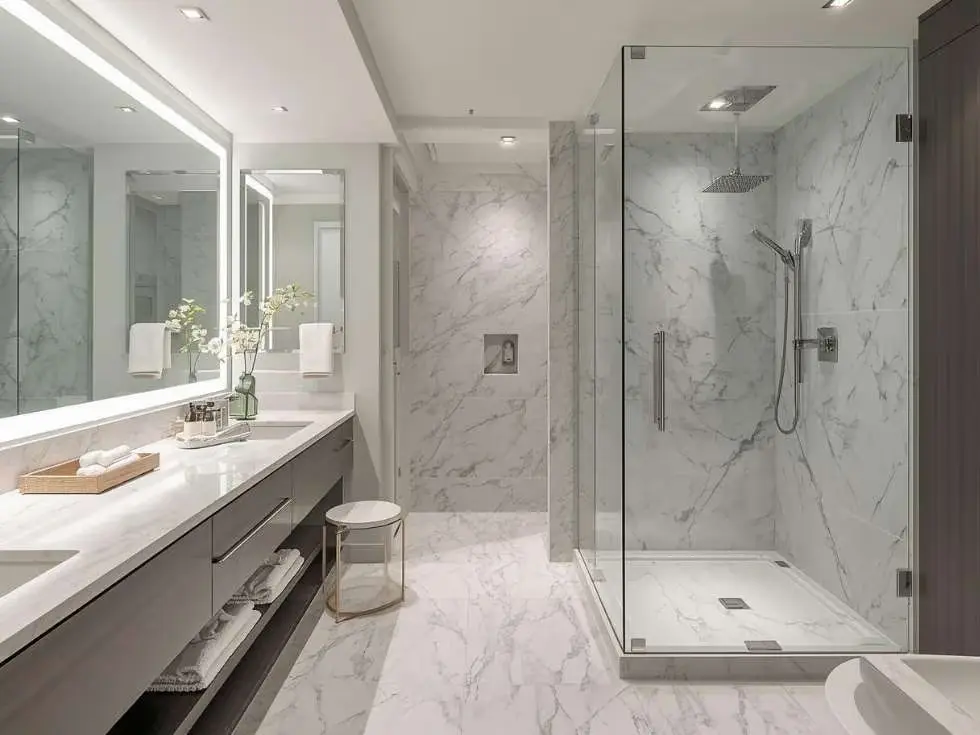
A glass shower can change the feel of a bathroom without changing its footprint. It lets light travel farther, puts tile and fixtures on display, and gives the room a more open profile. The right design also has to work with the layout, daily routines, and budget. Here’s what to consider when planning glass shower installation, from choosing a frameless shower door to preparing the space for a good fit.
How glass showers create a brighter, more open bathroom
A glass enclosure creates fewer visual interruptions than an opaque curtain or wall. That simple change can make the bathroom feel more connected, especially when the shower sits across from a window or near the vanity. The effect depends on the room’s layout and finishes, but glass often helps the space feel lighter without requiring a major renovation.
Letting natural and artificial light move through the room
Light has a way of making a bathroom feel more welcoming, even on an ordinary morning. Clear glass allows daylight and fixture light to pass into the shower area rather than stopping at a solid barrier. If the room has limited natural light, a glass enclosure can help the existing sconces or ceiling fixtures reach more of the space.
Making compact bathrooms feel less enclosed
In a small bathroom, a visual boundary can make the room seem even tighter. A glass panel keeps the shower distinct while allowing the eye to take in more of the room at once. The result is not extra floor area, of course, but the sense of openness can make daily use feel less cramped.
Showing off tile, stone, and other design details
When the shower is finished with carefully chosen tile or stone, a clear enclosure lets those surfaces remain part of the room’s overall design. Grout patterns, niches, and accent bands can be seen rather than hidden behind a curtain. That visibility can also be a useful reminder to choose shower finishes you’ll be happy to see every day.
Why homeowners choose a frameless shower door
A frameless shower door is often chosen for its spare, polished appearance, but its appeal is not limited to one kind of bathroom. The design can feel at home beside traditional tile as well as newer, simpler finishes. Since glass and hardware are both visible, selecting them together helps the enclosure feel intentional rather than added on later.
Achieving a clean look with minimal hardware
With fewer visible framing elements, the glass itself becomes the main feature. Hinges, handles, and support pieces still matter, though; their shape and finish can either blend in or become a small accent. A restrained hardware choice usually keeps attention on the lines of the enclosure and the materials around it.
Matching glass to different bathroom styles
The glass enclosure should relate to the rest of the room, not compete with it. Simple hardware can suit a contemporary space, while a warmer metal finish may work well with traditional cabinetry or mixed materials. Looking at tile, faucets, lighting, and cabinet pulls as a group makes it easier to choose a direction that feels consistent.
Choosing clear, frosted, or textured glass for privacy
Glass options vary in how much they reveal and how they affect the room’s light. The best choice depends on whether openness, privacy, or a little visual texture matters most. These broad differences can help narrow the decision before comparing specific finishes:
| Glass choice | General appearance | A consideration |
| Clear | Keeps sightlines open | Shows tile and shower items clearly |
| Frosted | Softens visibility | Can make the enclosure feel more private |
| Textured | Adds a patterned surface | The texture becomes part of the room’s look |
Samples viewed in the bathroom’s own lighting can look different from images on a screen. Consider how the glass will relate to the shower tile and how much privacy the household wants. Those practical preferences are usually more useful than choosing by appearance alone.
How glass showers balance style and everyday function
A shower enclosure is part of the room’s design, but it also gets used every day. Door movement, entry space, and water control all affect whether the setup feels comfortable over time. Thinking through these details early can help keep an attractive design from becoming inconvenient in practice.
Making the shower easier to access
The opening should feel natural to approach, with enough room to step in and out without awkward movement. A swinging door needs clearance, while other configurations may suit a tighter layout better. Consider who uses the shower and whether the entry will remain comfortable when towels, bath mats, or nearby cabinetry are in place.
Considering water containment and splash control
Glass alone does not guarantee that every drop stays inside the shower. The opening, showerhead direction, floor slope, and placement of fixed panels all influence where water travels. A design that accounts for those details can help limit splashing, while thoughtful daily use—such as directing the spray away from the opening—can help too.
Choosing hardware that suits daily use
Handles and hinges should feel comfortable in the hand and work with the door’s movement. Their finish also needs to make sense alongside other bathroom fixtures. Since hardware is touched frequently and exposed to moisture, choosing pieces that are appropriate for the setting is more useful than treating them as a last-minute decorative detail.
What to know about glass safety and durability
Glass for a shower should be selected for its intended use, and installation should follow the product instructions and applicable local requirements. The enclosure also depends on the quality of its supporting surfaces and hardware, not just the panel itself. A little attention to these factors helps homeowners make informed choices and avoid assuming that all glass installations are alike.
Understanding tempered glass
Tempered glass is commonly used in shower enclosures because it is processed for safety use and behaves differently from ordinary glass if it breaks. The specific product and installation requirements still matter, so confirm that the glass is appropriate for the application. A qualified installer can also explain how the chosen panel will be supported and secured.
Comparing glass thickness and finish options
Glass thickness and surface finish can affect the appearance, feel, and specifications of an enclosure. Availability varies by design and manufacturer, so it is best to compare options for the actual opening rather than assume one thickness fits every layout. Ask how the selected glass is intended to be installed and what care its finish requires.
Caring for hinges, handles, and seals
Routine care can help keep the door moving smoothly and the enclosure looking tidy. Follow the care instructions for the glass, metal finishes, and seals; harsh products may not be suitable for every material. It is also sensible to watch for loose hardware or worn seals and address concerns before they become harder to manage.
What affects the cost of glass shower installation
The price of a glass shower installation depends on more than the number of panels. The opening’s dimensions, the type of door, the finish choices, and the condition of the space can all influence the work involved. Comparing estimates is most useful when each one describes a similar scope of work and materials.
How shower size and layout shape the price
A larger enclosure may require more glass, while an unusual shape can add measuring and fitting complexity. Door placement matters too: a tight bathroom may call for a configuration that avoids nearby fixtures or cabinetry. The cost reflects the actual layout, so a general price range cannot substitute for measurements and a project-specific estimate.
When custom glass may be needed
Not every shower opening is perfectly square or built to a standard dimension. A sloped ceiling, angled wall, or distinctive footprint may call for glass made to fit the space. Accurate measurements and a clear understanding of the wall and floor conditions help determine whether a standard configuration is suitable.
Factoring in hardware, finishes, and preparation work
Hardware choices and finish preferences affect the overall project, as can any preparation needed before the glass is installed. To compare the pieces that commonly shape an estimate, it helps to look at them separately:
| Cost factor | Why it can matter |
| Enclosure size | Influences the amount of glass required |
| Door configuration | Affects hardware and fitting needs |
| Glass and finish selection | Options vary by product and specification |
| Site preparation | Repairs or adjustments may be needed before installation |
The details behind each line item can be as important as the total. Ask what is included, whether preparation work is anticipated, and how changes to the layout or finish would affect the estimate. That conversation can make different proposals easier to compare fairly.
How to prepare for a successful installation
A smoother installation starts before the glass arrives. Decisions about dimensions, tile, plumbing fixtures, and door movement are connected, so coordinating them can prevent avoidable surprises. Planning ahead also gives the installer a clearer picture of the finished bathroom and the conditions on site.
Measuring the space and checking walls for alignment
Measurements need to reflect the actual opening, including any variation in wall alignment or floor level. A bathroom that looks square at a glance may have small differences that matter when glass is fitted. Confirm who is responsible for final measurements and when those measurements should be taken, particularly if tile or other surfaces are still being completed.
Planning tile, fixtures, and door placement
The location of showerheads, controls, niches, and nearby fixtures can affect where a door or fixed panel makes sense. It’s useful to settle those choices in relation to the enclosure rather than treating each one as a separate decision. A short planning checklist can keep the key details in view:
- Confirm the intended door opening and direction.
- Check that plumbing fixtures do not interfere with the door.
- Coordinate tile edges and finished wall surfaces with the glass layout.
- Consider where towels and bath mats will sit outside the enclosure.
Reviewing these points with the installer before work begins can clarify any trade-offs. It may also reveal that a small change in placement would make the shower easier to use. The goal is a layout that fits the room as it will actually function.
Knowing when to work with a professional installer
Glass panels are heavy, and their fit depends on careful measurements and appropriate support. Professional guidance is especially useful when the opening is irregular, the door is large, or the installation must coordinate with new tile or fixtures. Before work starts, discuss the scope, site preparation, measurement process, and care instructions so expectations are clear on both sides.
Conclusion
A well-planned glass shower can bring light and visual space into a bathroom while still supporting privacy, comfortable access, and everyday use. The most satisfying result comes from matching the glass and hardware to the room, accounting for the actual layout, and preparing carefully before installation. With those decisions made in the right order, a frameless shower door can feel like a natural part of the bathroom rather than an afterthought.
Frequently Asked Questions
Does a glass shower make a small bathroom look bigger?
It can make a compact bathroom feel more open by keeping sightlines less interrupted, though it does not add physical floor space. The effect depends on the layout, lighting, and finishes.
Is clear glass the best choice for a shower enclosure?
Not necessarily. Clear glass keeps tile visible and sightlines open, while frosted or textured glass can offer a more private appearance. The right choice depends on household preferences and the room’s design.
What is the difference between framed and frameless shower doors?
The main visual difference is how much framing is visible around the glass. Frameless designs use less visible framing, while the specific support and hardware depend on the product and installation.
What should I consider when choosing a shower door style?
Think about the available clearance, the position of nearby fixtures, how the door will move, and who uses the shower. These practical details can narrow the options before you settle on appearance.
Is tempered glass commonly used for shower doors?
Tempered glass is commonly used for shower enclosures. Confirm that the product is intended for the application and that its installation follows manufacturer guidance and local requirements.
What can affect the cost of a glass shower installation?
Enclosure size, layout, glass and hardware choices, and the amount of site preparation can all affect cost. A project-specific estimate is the best way to understand what is included.
How should I prepare my bathroom before installation?
Confirm that measurements are being taken at the right stage, coordinate tile and fixtures with door placement, and ask the installer about site access and preparation. Clear expectations can help the work proceed smoothly.
Also Read
- https://rizways.com/how-to-clean-light-switches-door-handles-and-other-high-touch-surfaces-without-damaging-them/
https://rizways.com/what-cooling-tower-performance-data-should-trigger-a-repair-or-thermal-upgrade-assessment/
https://rizways.com/live-casino-presenters-the-communication-skills-behind-the-screen/
